
Your air conditioner picks the hottest day of the year to act up. It always does. Maybe it’s blowing warm air, cycling on and off every few minutes, or making a sound that belongs in a horror movie. The good news? Most AC problems fall into a handful of categories, and many of them have straightforward fixes you can handle yourself.
This guide covers the most common air conditioning problems homeowners face, explains why each one happens, and walks you through the fixes. Some are five-minute DIY jobs. Others require a licensed HVAC technician. Knowing the difference saves you money and keeps your system running longer.
Key Takeaways
- A dirty air filter causes most AC issues — replacing it every 30 to 90 days prevents airflow restrictions, frozen coils, and premature compressor wear.
- Refrigerant leaks need professional repair — low refrigerant isn’t a DIY top-off; it means there’s a leak that must be found and sealed by a certified technician.
- Short cycling signals electrical or sizing problems — an AC that turns on and off rapidly may have a faulty capacitor, an oversized unit, or a tripped safety switch.
- Frozen evaporator coils point to airflow or refrigerant issues — restricted airflow from dirty filters or low refrigerant causes ice buildup that shuts your system down.
- Strange noises always mean something specific — banging, squealing, hissing, and clicking each indicate a different component failure that gets worse if ignored.
- Preventive maintenance prevents 80% of emergency calls — an annual maintenance tune-up catches small problems before they turn into expensive breakdowns.
What Are the Most Common AC Problems Homeowners Face?
Quick Answer: The most common AC problems include dirty filters, refrigerant leaks, frozen evaporator coils, faulty capacitors, clogged condensate drains, thermostat malfunctions, and compressor failures. Most stem from poor maintenance, and many have simple fixes that don’t require a technician.
Air conditioning systems have mechanical, electrical, and refrigerant components that all need to work together. When one part fails, it creates a chain reaction. A clogged filter restricts airflow, which freezes the evaporator coil, which forces the compressor to work harder, which shortens the system’s lifespan.
Understanding these connections helps you spot problems early. Here’s a quick overview of the issues you’re most likely to encounter, ranked by how often they happen.
| AC Problem | Frequency | Typical Repair Cost | DIY Fixable? | Urgency |
|---|---|---|---|---|
| Dirty or clogged air filter | Very common | $5–$40 (filter cost) | Yes | Low |
| Refrigerant leak | Common | $200–$1,500 | No | High |
| Frozen evaporator coil | Common | $150–$700 | Partially | Medium |
| Clogged condensate drain | Common | $75–$250 | Yes | Medium |
| Faulty capacitor | Common | $150–$400 | No | High |
| Thermostat malfunction | Moderate | $50–$300 | Sometimes | Low |
| Compressor failure | Less common | $1,200–$3,500 | No | Critical |
| Fan motor failure | Moderate | $200–$650 | No | High |
Why Is My AC Blowing Warm Air Instead of Cold?

Quick Answer: An AC blowing warm air usually means low refrigerant from a refrigerant leak, a dirty condenser unit blocking heat release, a failed compressor, or a thermostat set incorrectly. Check your thermostat settings and outdoor unit first before calling for service.
Check Your Thermostat Settings First
It sounds obvious, but thermostat calibration issues cause more service calls than most people realize. Make sure your thermostat is set to “cool” (not “heat” or “fan only”) and the temperature is set below the current room temperature. If someone bumped the settings or the batteries died, that’s your entire problem.
Also check the fan setting. When it’s set to “ON” instead of “AUTO,” the fan runs constantly, even between cooling cycles. This pushes unconditioned air through your vents, which feels warm.
Inspect the Outdoor Condenser Unit
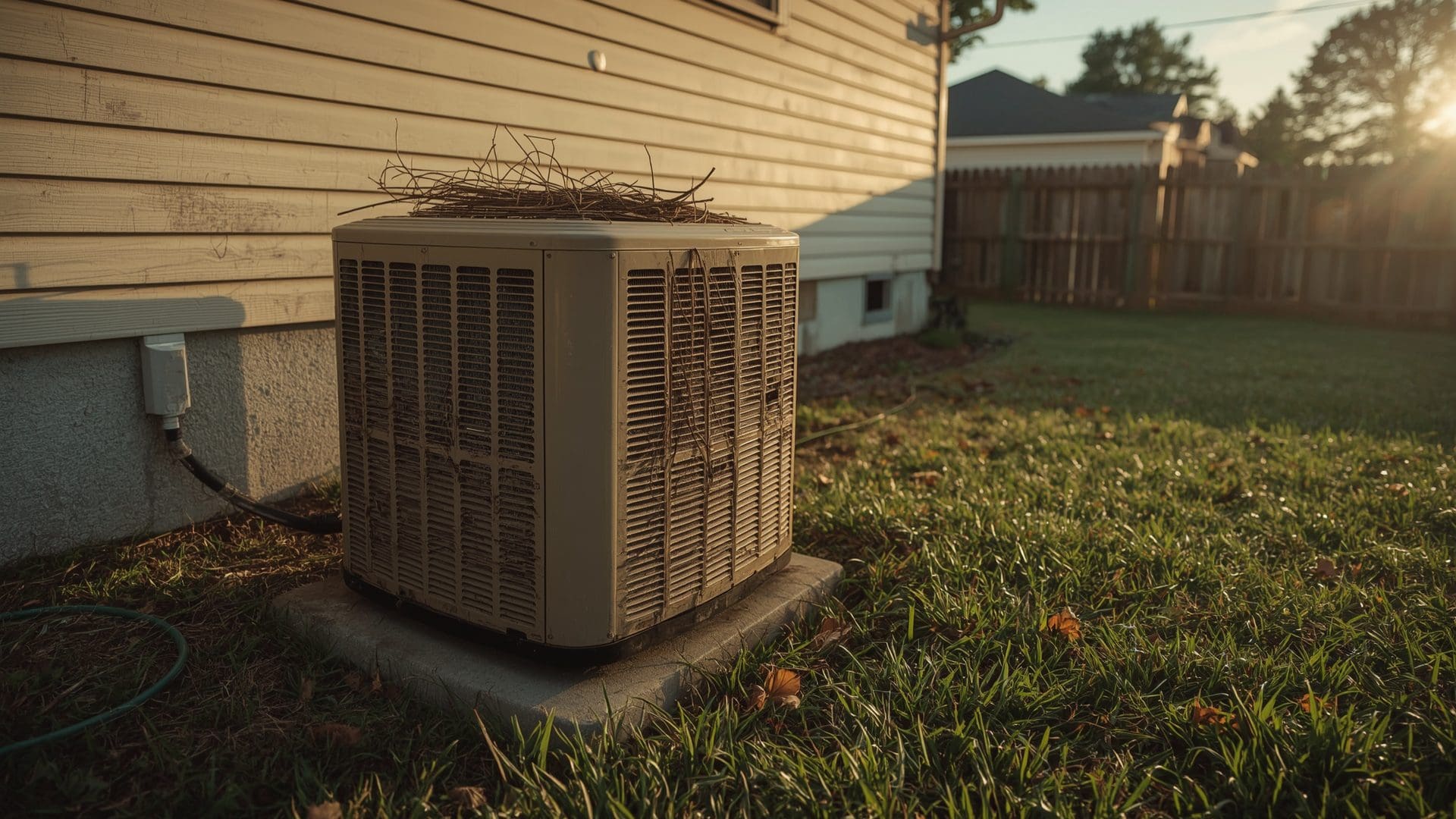
Your condenser unit sits outside and releases heat from your home. If it’s packed with leaves, dirt, grass clippings, or other debris, it can’t dump that heat effectively. Your system runs but the air never gets cold.
Clear at least two feet of space around the unit. Rinse the condenser fins gently with a garden hose from the inside out. Bent fins can be straightened with a fin comb, a cheap tool from any hardware store.
Low Refrigerant Levels
Refrigerant (commonly R-410A in systems made after 2010 or R-32 in newer models) is the chemical that absorbs heat from indoor air. If your system is low on refrigerant, it can’t absorb enough heat to cool properly. You’ll notice warm air, hissing near the refrigerant lines, and ice on the evaporator coil.
This always means a leak somewhere in the system. AC units don’t “use up” refrigerant like a car uses gasoline. A certified HVAC technician must locate the leak, repair it, and recharge the system to the manufacturer’s specified charge level.
What Causes an AC Unit to Freeze Up?
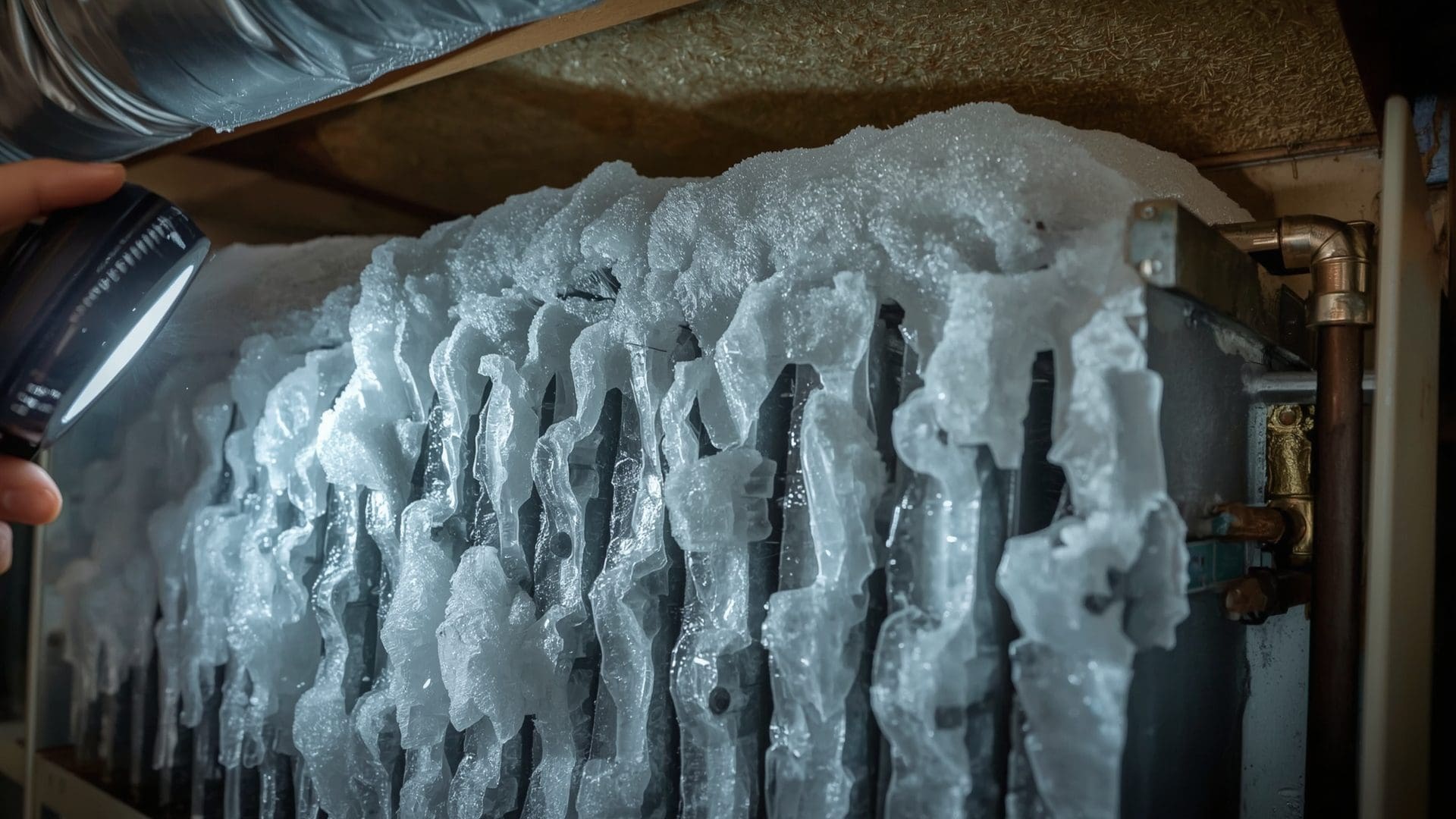
Quick Answer: AC units freeze when airflow across the evaporator coil drops too low or refrigerant levels fall below spec. The coil temperature drops below 32°F, moisture in the air freezes on contact, and ice builds until the system shuts down. Dirty filters are the leading cause.
Restricted Airflow from Dirty Filters
Your evaporator coil needs a constant stream of warm air passing over it. That warm air is what keeps the coil from getting too cold. When a dirty air filter blocks airflow, the coil temperature plummets, and moisture in the air freezes on the coil surface.
The fix is simple: replace the filter. Standard fiberglass filters should be replaced every 30 days. Pleated filters last 60 to 90 days. High-efficiency HEPA-style filters can last up to six months, but check them monthly in peak summer.
Blocked Return Vents
Furniture, curtains, or closed dampers blocking your return air vents create the same problem as a dirty filter. The system can’t pull enough air through the evaporator coil. Walk through your home and make sure every return vent is open and unobstructed.
Low Refrigerant Causing Freeze-Up
When refrigerant is low, the pressure inside the evaporator coil drops. Lower pressure means a lower boiling point, which means the coil gets colder than it should. Ice forms even when airflow is fine. If you’ve replaced your filter and cleared all vents but the coil is still freezing, call a technician to check refrigerant levels.
What to Do When Your AC Freezes
Turn the system off but leave the fan running on “ON” mode. This pushes warm air over the frozen coil and melts the ice. Don’t try to chip ice off, as you can damage the delicate coil fins. Once the ice melts completely (usually two to four hours), replace the filter and restart the system. If it freezes again, you need professional service.
Why Does My AC Keep Turning On and Off Rapidly?
Quick Answer: Rapid on-off cycling, called short cycling, typically means an oversized AC unit, a failing capacitor, a dirty condenser coil, low refrigerant, or a tripping high-pressure safety switch. Short cycling wastes energy and damages the compressor through excessive start-stop stress.
Oversized AC Systems
An AC unit that’s too large for your home cools the air near the thermostat too quickly. The thermostat registers the target temperature and shuts the compressor off. But the rest of the house is still warm. Minutes later, the temperature rises, and the cycle starts again.
This creates uncomfortable temperature swings, high humidity (the system never runs long enough to dehumidify), and excessive wear on the compressor. The only real fix is proper load calculation and correct system sizing, sometimes meaning equipment replacement.
Failing Run or Start Capacitor
Capacitors store electrical energy and deliver the initial jolt your compressor and fan motors need to start. When a capacitor weakens, the motor tries to start, can’t sustain operation, and shuts down on a safety switch. You’ll hear a humming or clicking sound from the outdoor unit.
Capacitor replacement is relatively inexpensive ($150–$400 installed), but capacitors store dangerous electrical charges. This is not a DIY repair unless you have electrical training and proper discharge tools.
Dirty Condenser Coil Causing Overheating
When the condenser coil is caked with dirt, the compressor can’t release heat efficiently. Internal pressures and temperatures climb until the high-pressure safety switch trips and shuts the system down. Once it cools slightly, the system tries again. This cycle repeats until you clean the coil or the compressor fails.
How Do I Fix a Clogged AC Condensate Drain?
Quick Answer: Flush the condensate drain line with a mixture of one cup distilled white vinegar poured into the drain access point near your indoor air handler. For stubborn clogs, use a wet/dry vacuum on the outdoor drain exit or a flexible drain brush to clear algae and sludge buildup.
How the Condensate Drain Works
Your AC removes humidity from indoor air. That moisture collects on the evaporator coil, drips into a drain pan, and flows through a PVC drain line to the outside of your home. Over time, algae, mold, and sludge build up inside the line and block it.
When the drain clogs, water backs up into the drain pan. Many systems have a float switch that shuts the AC off when the pan fills. Others let the water overflow, causing water damage to ceilings, walls, and floors.
Step-by-Step Drain Line Cleaning
- Turn off the AC system at the thermostat and the breaker.
- Locate the drain line access point (a T-shaped PVC fitting near your indoor unit).
- Remove the cap and pour one cup of distilled white vinegar into the line.
- Wait 30 minutes for the vinegar to break down algae and buildup.
- Flush with warm water to clear the loosened debris.
- Check the outdoor drain exit to confirm water flows freely.
- For tough clogs, attach a wet/dry vacuum to the outdoor drain exit and suction out the blockage.
Preventing Future Clogs
Pour a half cup of vinegar into the drain access point once a month during cooling season. Some homeowners install condensate drain pan tablets (slow-dissolving biocide tablets) that prevent algae growth between cleanings. These cost about $5–$10 for a six-month supply.
What AC Noises Should I Worry About?
Quick Answer: Banging indicates a loose or broken internal component. Squealing means a worn belt or failing fan motor bearing. Hissing suggests a refrigerant leak. Clicking at startup is normal, but continuous clicking signals a relay or control board issue. Grinding always means metal-on-metal contact requiring immediate shutdown.
| Noise Type | Likely Cause | Location | Severity | Recommended Action |
|---|---|---|---|---|
| Banging / clanking | Loose connecting rod, piston pin, or unbalanced blower | Indoor or outdoor unit | High | Shut off and call technician |
| Squealing / screeching | Worn fan belt or failing motor bearing | Indoor air handler | Medium | Schedule service soon |
| Hissing / bubbling | Refrigerant leak in coil or line | Near refrigerant lines | High | Call technician immediately |
| Clicking (continuous) | Failing relay, contactor, or control board | Outdoor unit | Medium | Schedule service |
| Grinding | Seized motor bearing or broken fan blade | Either unit | Critical | Shut off immediately |
| Buzzing | Loose wiring, debris in unit, or failing contactor | Outdoor unit | Medium | Inspect; call if persistent |
When to Shut Off Your System
If you hear grinding, banging, or any noise accompanied by a burning smell, shut the system off at the breaker immediately. Running the system with these symptoms can turn a $300 repair into a $3,000 compressor replacement. Squealing and buzzing are less urgent, but schedule service within a few days to avoid escalation.
Why Is My AC Running But Not Cooling the House?
Quick Answer: An AC that runs continuously without cooling usually has a dirty evaporator coil, low refrigerant, a failing compressor, or ductwork leaks losing cooled air into unconditioned spaces. Check your filter and vents first, then measure the supply-to-return temperature difference to diagnose further.
The Temperature Split Test
Place a thermometer at a supply vent (where cold air blows out) and another at the return vent (where air gets sucked in). A properly working AC produces a temperature split of 15°F to 20°F. If the difference is less than 15°F, the system isn’t removing enough heat.
A low split combined with warm supply air points to refrigerant or compressor issues. A low split with decent supply temperature but a warm house points to ductwork problems losing conditioned air.
Leaking Ductwork
The average home loses 20% to 30% of conditioned air through duct leaks, according to Energy Star. That means your AC might be working perfectly, but the cooled air never reaches your rooms. Leaky ducts in unconditioned attics or crawl spaces are especially wasteful.
Check accessible ductwork for obvious gaps at joints, disconnected sections, or damaged flexible duct. Sealing ducts with mastic sealant (not duct tape, which deteriorates quickly) or having a professional duct sealing service can dramatically improve cooling performance.
Dirty Evaporator Coil
Even with regular filter changes, some dust reaches the evaporator coil over time. A thin layer of grime on the coil acts as insulation, reducing its ability to absorb heat. Professional evaporator coil cleaning during an annual maintenance tune-up addresses this. Coil cleaning typically costs $100 to $400 depending on accessibility.
What Electrical Problems Cause AC Failures?
Quick Answer: The most common electrical AC failures involve capacitors, contactors, relays, and control boards. Corroded wiring, loose connections, and power surges also damage components. Electrical problems cause about 30% of all AC service calls and require a licensed technician for safe diagnosis.
Contactor Wear
The contactor is an electromagnetic switch that controls power flow to the compressor and condenser fan. Over thousands of on-off cycles, the contact points pit and corrode. A pitted contactor may not make full electrical contact, causing the outdoor unit to hum without starting or to run intermittently.
Contactors cost $20–$50 for the part and $100–$250 for professional installation. They’re a wear item that should be inspected annually.
Wiring and Connection Issues
Vibration from the compressor and fan motors can loosen wire connections over time. Rodents in attics and crawl spaces chew through low-voltage thermostat wiring. Corrosion from moisture exposure degrades connections at outdoor disconnect boxes. Any of these can cause intermittent operation, blown fuses, or complete system failure.
Tripped Breakers and Blown Fuses
If your AC trips the circuit breaker, reset it once. If it trips again immediately, stop. Repeated tripping indicates a short circuit, a ground fault, or a compressor drawing excessive amperage. Running the system on a repeatedly tripped breaker creates a fire risk. Call an electrician or HVAC technician to diagnose the fault.
| Electrical Component | Function | Failure Symptom | Typical Lifespan | Replacement Cost (Installed) |
|---|---|---|---|---|
| Run capacitor | Sustains motor operation | Motor shuts off after starting | 10–20 years | $150–$400 |
| Start capacitor | Provides startup voltage boost | Motor hums but won’t start | 10–20 years | $150–$350 |
| Contactor | Controls compressor power | Outdoor unit won’t engage | 5–10 years | $100–$250 |
| Control board | Manages system logic and timing | Erratic operation or no response | 10–15 years | $200–$600 |
| Thermostat relay | Signals compressor to start | System doesn’t respond to thermostat | 10–15 years | $75–$200 |
How Do I Troubleshoot an AC Compressor That Won’t Start?
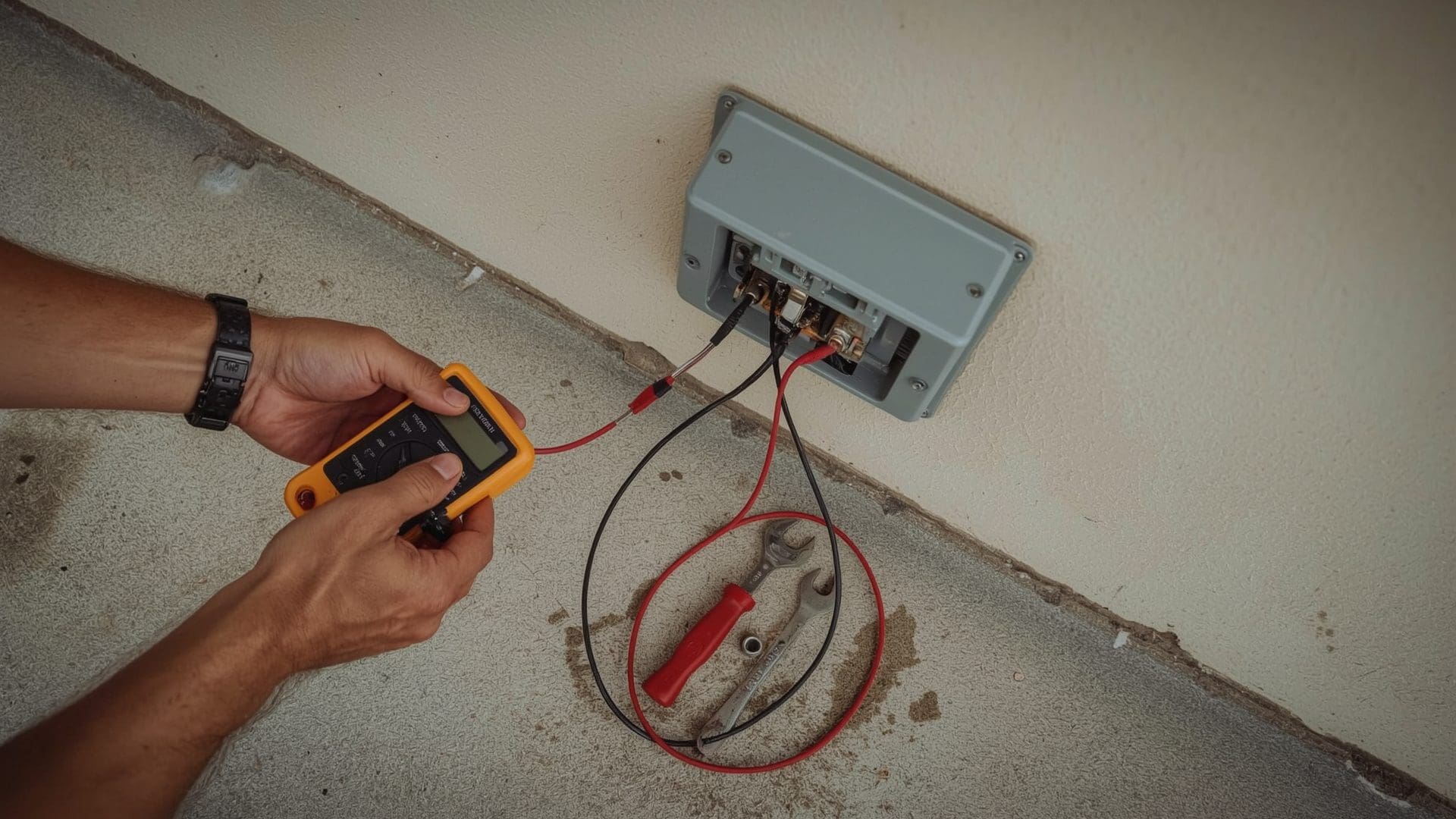
Quick Answer: When the compressor won’t start, check the thermostat, breaker, and disconnect box first. Then listen for humming (bad capacitor), clicking (contactor issue), or silence (possible power failure or tripped safety). A completely dead compressor that tests open on a multimeter needs replacement.
Systematic Compressor Troubleshooting Steps
- Verify the thermostat is calling for cooling (the display should show the system actively running).
- Check the circuit breaker for the outdoor unit. Reset if tripped, but only once.
- Inspect the outdoor disconnect box (usually mounted on the wall near the unit) and confirm the disconnect is engaged.
- Listen at the outdoor unit. Humming often means a failed capacitor. Clicking suggests contactor trouble. Complete silence may mean no power is reaching the unit.
- Look for a reset button on the outdoor unit (some models have a high-pressure reset). Press it once and wait five minutes.
- If none of these steps restores operation, the compressor itself may have failed. Call a technician for a compressor amp draw test and winding resistance check.
Compressor Replacement vs. Full System Replacement
A new compressor costs $1,200 to $3,500 installed. If your system is over 10 years old and the compressor fails, it often makes more financial sense to replace the entire outdoor unit or the full system. A new compressor in an aging system may fail again within a few years as other components reach end of life.
Get a quote for both options. Compare the compressor repair cost against 30% to 50% of a new system’s price. If the repair exceeds that range, replacement usually delivers better long-term value.
What Thermostat Problems Affect AC Performance?
Quick Answer: Common thermostat problems include dead batteries, incorrect mode settings, poor location causing ghost readings, loose wiring behind the wall plate, and programming errors. A thermostat mounted near a heat source or in direct sunlight reads artificially high temperatures and overcools your home.
Thermostat Location Problems
Thermostats should be on interior walls, away from windows, supply vents, kitchens, and exterior doors. A thermostat near a sunny window reads the room as hotter than it actually is. The AC runs longer than necessary, wasting energy and overcooling other rooms.
If relocating the thermostat isn’t practical, a smart thermostat with remote sensors (like the Ecobee) can average temperatures from multiple rooms for more balanced comfort.
Wiring and Battery Issues
A blank thermostat screen usually means dead batteries or a tripped HVAC system fuse. Replace the batteries first. If the screen stays blank, check the furnace or air handler for a blown 3-amp or 5-amp fuse on the control board. Loose wires behind the thermostat wall plate can cause intermittent operation. Remove the face plate, verify wires are securely seated in their terminals, and reattach.
How Can I Improve My AC’s Airflow Throughout the House?
Quick Answer: Improve AC airflow by replacing filters regularly, opening all supply and return vents, sealing duct leaks, cleaning the evaporator coil, and verifying the blower motor speed setting. Closing vents in unused rooms actually increases duct pressure and reduces total system efficiency.
Why Closing Vents Hurts Performance
Many homeowners close vents in unused rooms, thinking it redirects cool air where they need it. In reality, closing vents increases static pressure inside the ductwork. The blower motor works harder, energy costs go up, and the extra pressure can worsen existing duct leaks.
Keep all vents open. If certain rooms are consistently too hot or too cold, the problem is duct sizing, insulation, or air balancing, not vent position.
Blower Motor Speed Adjustments
Most residential air handlers have multi-speed blower motors. If the motor is set to a lower speed than needed, you’ll get reduced airflow and poor cooling in distant rooms. An HVAC technician can adjust the speed setting or verify the motor is operating at the correct RPM specified by the manufacturer. Variable-speed ECM motors adjust automatically but cost more to replace ($500–$1,200 installed) when they fail.
How Much Does It Cost to Fix Common AC Problems?
Quick Answer: Simple AC repairs like filter replacement cost under $40, while major component failures like compressor replacement run $1,200 to $3,500. The average AC service call costs $75 to $200 for diagnostics, with most repairs falling in the $150 to $600 range for parts and labor combined.
| Repair Category | Examples | Parts Cost | Labor Cost | Total Range |
|---|---|---|---|---|
| DIY maintenance | Filter replacement, drain flush, debris clearing | $5–$40 | $0 | $5–$40 |
| Minor electrical | Capacitor, contactor, relay replacement | $20–$80 | $100–$200 | $100–$400 |
| Refrigerant service | Leak detection, repair, and recharge | $50–$300 | $150–$500 | $200–$1,500 |
| Motor replacement | Blower motor, condenser fan motor | $100–$400 | $150–$300 | $200–$650 |
| Major component | Compressor, evaporator coil replacement | $500–$2,000 | $500–$1,500 | $1,200–$3,500 |
When Repair Cost Exceeds Replacement Value
Use the “5,000 rule” as a quick decision framework. Multiply the age of your system by the repair cost. If the result exceeds 5,000, replacement is typically the smarter investment. For example, a 12-year-old system needing a $500 repair: 12 × 500 = 6,000. That exceeds 5,000, so explore replacement options.
This rule isn’t absolute, but it gives you a reasonable starting point for the repair-vs-replace conversation with your HVAC contractor.
How Do I Prevent AC Problems Before They Start?
Quick Answer: Prevent AC problems with monthly filter checks, annual professional maintenance, keeping the condenser unit clear of debris, flushing the condensate drain line monthly, and monitoring your system for unusual sounds, smells, or performance changes. Maintenance costs $100 to $200 annually and prevents most emergency failures.
Monthly Homeowner Tasks
- Check or replace the air filter — a clean filter is the single most important thing you can do for your system.
- Inspect the condensate drain pan — standing water means the line is partially clogged.
- Clear the outdoor unit perimeter — maintain at least 24 inches of clearance around all sides.
- Listen to your system — new noises at startup or during operation signal developing problems.
Annual Professional Maintenance
A professional tune-up should happen once per year, ideally in spring before cooling season. During this visit, a technician checks refrigerant levels, cleans the evaporator and condenser coils, tests electrical connections, inspects the capacitor and contactor, clears the condensate drain, verifies thermostat calibration, and measures system airflow.
Most HVAC companies offer maintenance agreements at $150 to $250 per year that include one heating and one cooling tune-up, plus priority scheduling and repair discounts. These agreements pay for themselves by catching problems early and extending equipment life by two to five years on average.
Seasonal Shutdown and Startup
When cooling season ends, cover the top of the outdoor condenser unit with a piece of plywood to prevent debris from falling in (don’t wrap the entire unit, as trapped moisture causes corrosion). In spring, remove the cover, clean the unit, inspect the refrigerant line insulation, and run the system for 15 minutes while checking for normal operation before the first hot day arrives.
When Should I Call an HVAC Professional Instead of DIY Troubleshooting?
Quick Answer: Call a professional for refrigerant work, electrical component replacement, compressor diagnostics, strange burning smells, repeated breaker trips, and any repair involving opening the sealed refrigerant system. DIY is appropriate for filter changes, drain clearing, thermostat batteries, and debris removal around the outdoor unit.
DIY-Safe AC Fixes
- Replacing air filters
- Flushing the condensate drain line with vinegar
- Clearing debris from the outdoor unit
- Replacing thermostat batteries
- Checking and resetting circuit breakers (once only)
- Straightening condenser fins with a fin comb
- Verifying thermostat settings and mode
Jobs Requiring a Licensed Technician
- Any refrigerant handling (EPA Section 608 certification required)
- Capacitor replacement (risk of electrical shock)
- Compressor testing and replacement
- Electrical wiring repairs
- Evaporator coil cleaning or replacement (requires accessing sealed compartment)
- Blower and condenser fan motor replacement
- Duct leak testing and sealing
How to Choose a Reliable HVAC Technician
Look for NATE certification (North American Technician Excellence), which is the industry’s most recognized credential. Verify state licensing and insurance. Get at least two written estimates for non-emergency repairs. A trustworthy technician explains the problem, shows you the failed component when possible, and presents repair-vs-replace options without pressuring you toward the more expensive choice.
Frequently Asked Questions
How often should I replace my AC air filter?
Replace standard fiberglass filters every 30 days and pleated filters every 60 to 90 days. Homes with pets, smokers, or allergy sufferers should replace filters more frequently. A dirty filter is the most common cause of reduced cooling performance, frozen coils, and premature component wear.
Can I add refrigerant to my AC myself?
No. Federal EPA regulations require Section 608 certification to purchase and handle AC refrigerants like R-410A and R-32. Beyond the legal issue, adding refrigerant without fixing the underlying leak wastes money and harms the environment. Always hire a certified technician for refrigerant service.
Why does my AC smell bad when it turns on?
A musty smell means mold or mildew growth on the evaporator coil or inside the ductwork. A burning smell could indicate an overheating motor or electrical issue. A rotten egg smell near a gas furnace combo unit may signal a gas leak, which is an emergency. Turn the system off and address the source based on the smell type.
How long should a central AC system last?
A well-maintained central AC system lasts 15 to 20 years. Systems in hot climates that run heavily may last closer to 12 to 15 years. Annual maintenance, clean filters, and prompt repairs when issues appear all extend lifespan. Heat pumps used for both heating and cooling may have slightly shorter lifespans due to year-round use.
What is the ideal temperature to set my AC to?
The Department of Energy recommends 78°F when you’re home and awake. Raising the thermostat 7°F to 10°F while you’re away saves up to 10% annually on cooling costs. A programmable thermostat or smart thermostat automates these adjustments so you stay comfortable without wasting energy.
Why is my AC leaking water inside the house?
Indoor water leaks come from a clogged condensate drain line, a cracked drain pan, or a frozen evaporator coil that’s melting faster than the pan can drain. Check the drain line first since it’s the most common culprit. If the drain pan is cracked (common in older systems over 12 years), it needs replacement before the leak damages your ceiling or flooring.