
A frozen evaporator coil is one of the most common AC problems homeowners face, especially during the hot, humid summers in Cary, North Carolina. The evaporator coil is the part inside your air handler that absorbs heat from indoor air. When it ices over, your system can no longer cool your home effectively, and things can get worse fast if you ignore it.
Understanding why a frozen ac coil happens, what damage it can cause, and how to fix it will save you time, money, and a lot of discomfort. This guide walks you through everything you need to know, from the root causes to the thawing process and long-term prevention.
Ready to learn more? If your coil is already frozen and you need fast help, our team offers professional AC repair services to get your system running again quickly.
What the Evaporator Coil Actually Does
The evaporator coil sits inside your indoor air handler or furnace cabinet. It contains refrigerant, a chemical fluid that cycles between liquid and gas states to move heat. As warm air from your home passes over the coil, the refrigerant absorbs that heat and carries it outside. What remains is cooled air that gets pushed back through your vents.
The coil surface needs to stay above freezing to do this job correctly. When something disrupts the heat exchange process, the temperature on the coil drops below 32°F and moisture in the air freezes on contact. That layer of ice blocks airflow further, making the problem spiral quickly.
The Most Common Causes of a Frozen Evaporator Coil
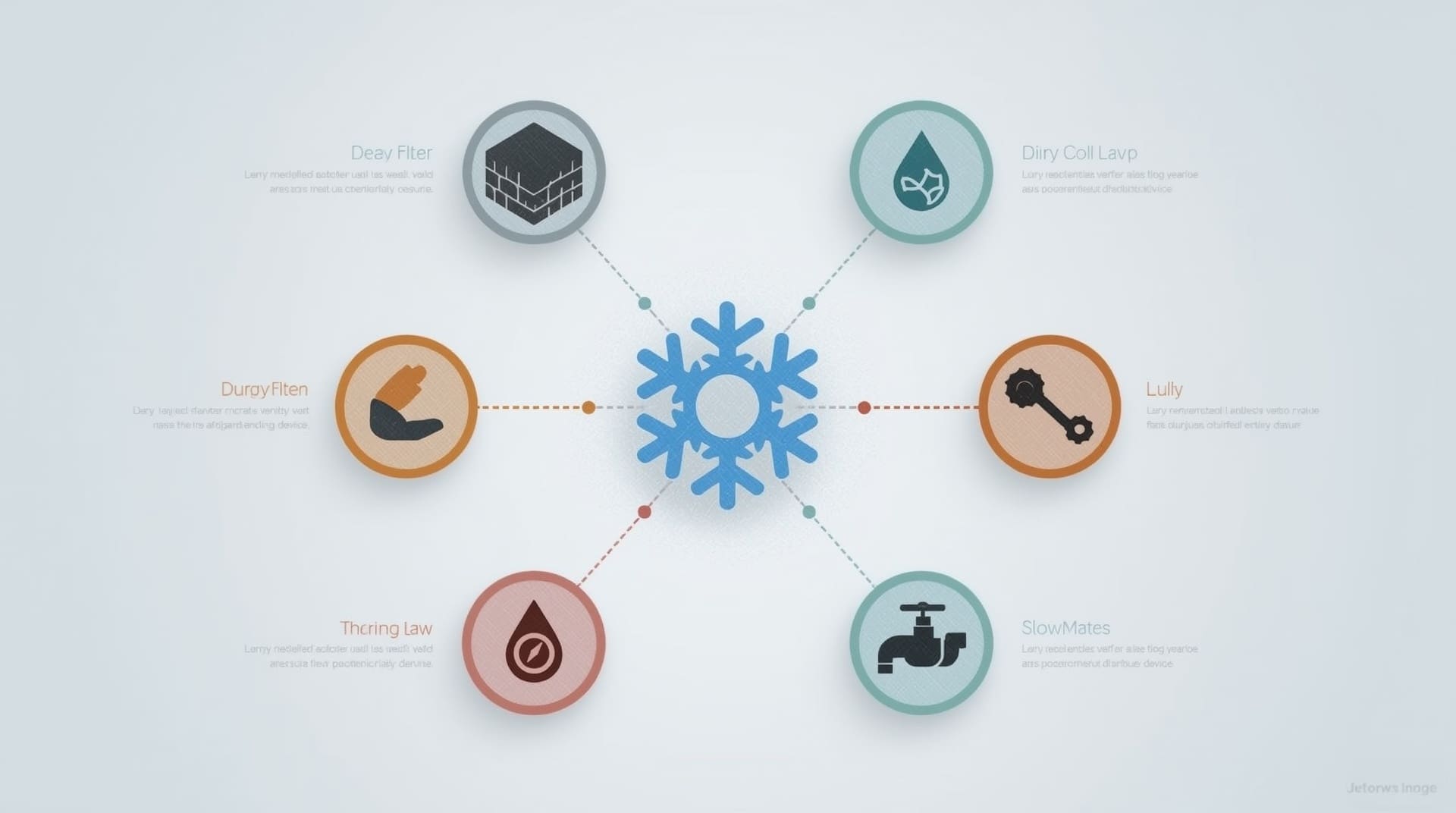
Several things can trigger an iced coil. Some are simple fixes you can handle yourself. Others point to a deeper mechanical problem that needs a technician.
1. Restricted Airflow
Airflow restriction is the most frequent culprit. The coil needs a steady supply of warm air to stay above freezing. When that supply drops, the refrigerant gets too cold and ice forms. Common airflow blockers include a clogged air filter, closed or blocked supply vents, a dirty blower fan, or collapsed ductwork.
Check your air filter first. A filter clogged with dust dramatically reduces airflow and is the easiest fix on this list. Replace it and monitor whether the freezing returns.
2. Low Refrigerant Charge
Refrigerant does not “run out” like gasoline. If your system is low, it has a leak somewhere. Low refrigerant causes the pressure inside the coil to drop, which lowers the coil temperature below the safe range. Ice forms quickly when this happens. A technician must find the leak, repair it, and recharge the system to the correct level.
3. Dirty Evaporator Coil
Over time, dust and grime coat the coil surface even if you change your filter regularly. This layer of buildup acts as insulation, preventing proper heat transfer. The refrigerant stays colder than it should, and ice begins to form. A thorough coil cleaning is the fix, and it should be part of your annual AC maintenance routine.
4. Running the AC in Cold Weather
Standard central air conditioners are not designed to run when outdoor temperatures fall below roughly 60°F. The system’s refrigerant pressures depend on ambient heat. Running the unit in cool conditions throws those pressures off and causes the coil to freeze. In the Triangle area, this can catch homeowners off guard during early spring or late fall when days are warm but nights are cold.
5. Blower Fan Failure
If the blower fan is weak, broken, or running at the wrong speed, warm air never reaches the coil in adequate volume. The result is the same as a blocked filter: the coil gets too cold and an iced coil forms. A failing capacitor often causes the blower motor to run slowly before it stops entirely.
6. Faulty Metering Device
The metering device, sometimes called an expansion valve or TXV, controls how much refrigerant flows into the evaporator coil. If it sticks open or fails, too much refrigerant enters the coil at once. This drops the pressure and temperature rapidly, leading to freezing even when everything else looks normal.
| Cause | DIY Fix? | Urgency Level |
|---|---|---|
| Clogged air filter | Yes | Low |
| Low refrigerant (leak) | No | High |
| Dirty evaporator coil | Partial | Medium |
| Running AC in cold weather | Yes (turn it off) | Low |
| Blower fan failure | No | High |
| Faulty metering device | No | High |
Warning Signs You Have a Frozen Evaporator Coil
The ice is often hidden inside your air handler cabinet, so you may not see it directly. Your system will give you signals before you ever open the cabinet door.
- Warm air blowing from vents: The coil cannot absorb heat when it is encased in ice, so conditioned air never reaches your rooms.
- Reduced airflow from vents: Ice physically blocks air from moving through the system, cutting supply volume noticeably.
- Water pooling near the air handler: As the ice thaws between cooling cycles, it overflows the drain pan and puddles on the floor.
- Ice visible on the refrigerant line: The copper suction line running from the indoor unit to the outdoor unit may show frost or ice buildup.
- Higher than normal energy bills: The system runs longer trying to hit the thermostat set point, consuming more electricity without delivering results.
- Hissing or bubbling sounds: These can indicate refrigerant flowing irregularly, a sign of a possible leak or pressure issue.
The Risks of Ignoring a Frozen AC Coil
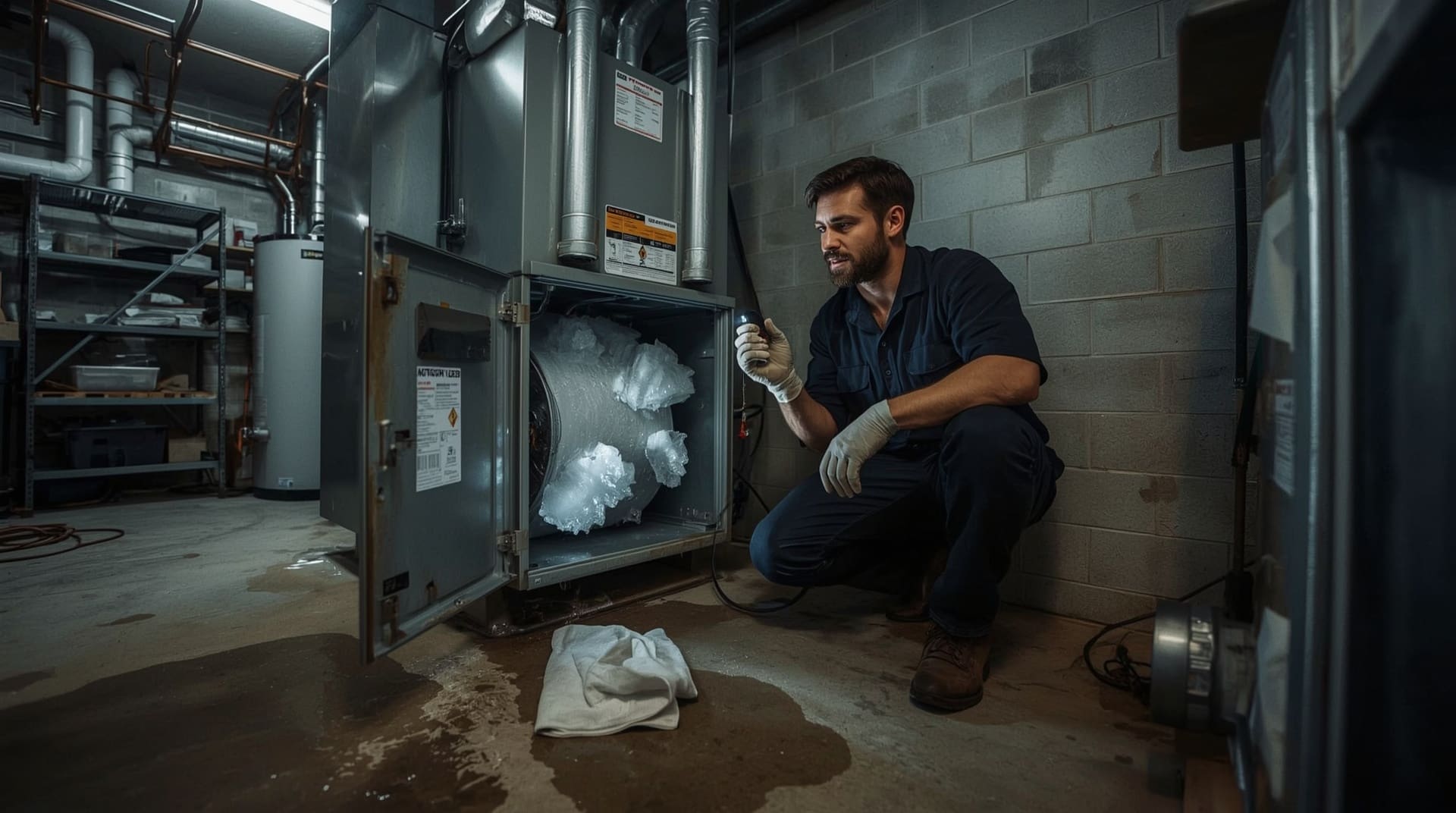
Letting a frozen ac coil go unaddressed is not a minor inconvenience. It creates a chain of problems that can lead to expensive repairs or full system replacement.
Compressor Damage
The compressor is the most expensive single component in your AC system. It is designed to compress refrigerant in gas form only. When the coil is frozen, liquid refrigerant can travel back toward the compressor. Liquid cannot be compressed, so the compressor strains and can fail. Replacing a compressor often costs as much as replacing the entire outdoor unit.
Water Damage and Mold Growth
When a large block of ice melts, the drain pan may not handle the volume. Overflow water can saturate insulation, damage drywall, warp flooring, and create conditions perfect for mold growth. In Cary’s humid climate, mold can establish quickly in wet building materials.
Refrigerant Line Damage
Prolonged freezing puts mechanical stress on the refrigerant lines and fittings. Over time, this can crack connections and cause refrigerant leaks that require professional repair and recharge.
How to Safely Thaw a Frozen Evaporator Coil
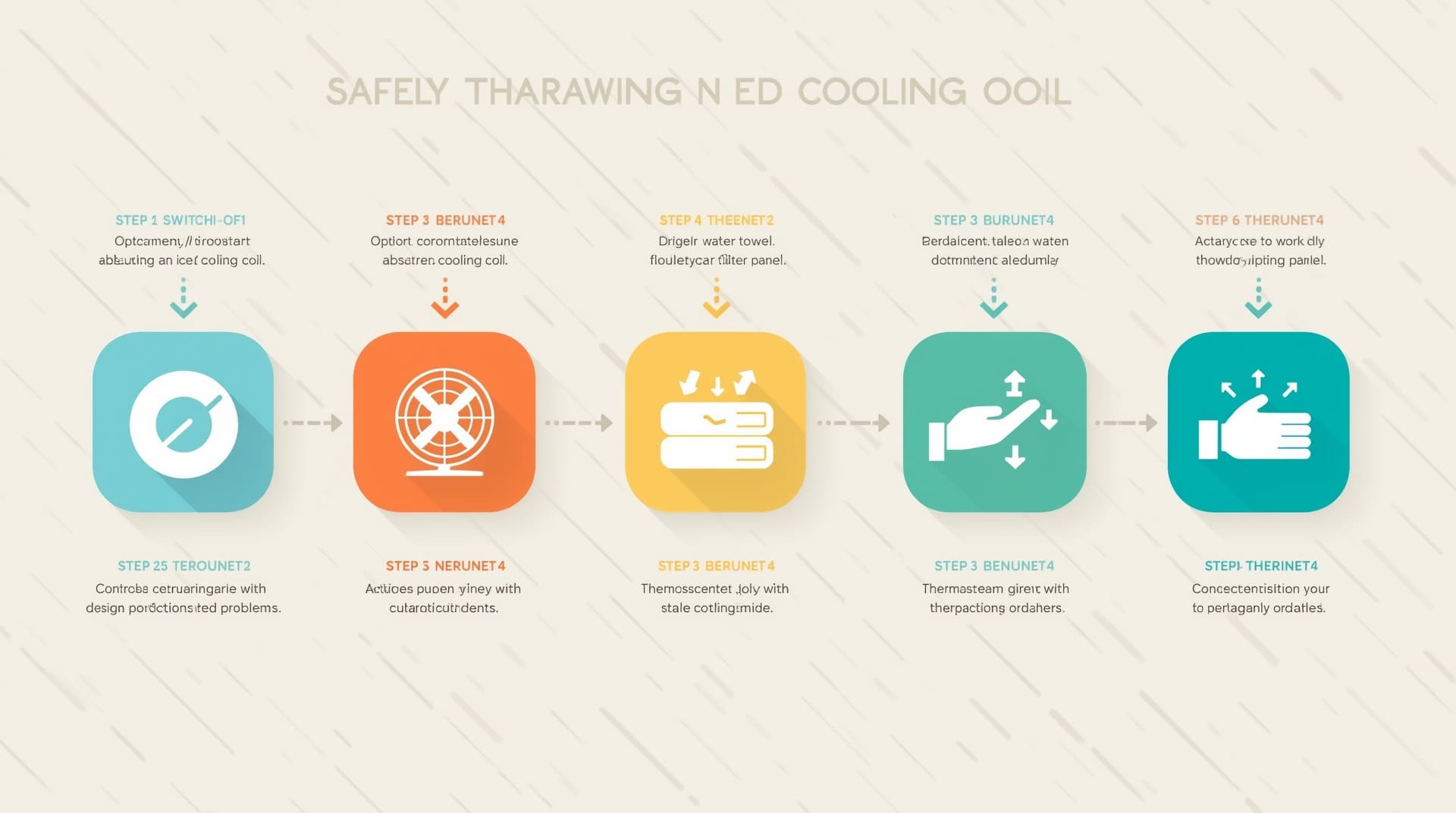
Thawing the coil correctly protects your equipment and prevents water damage. Follow these steps in order.
Step 1: Turn Off the Cooling
Switch your thermostat from “Cool” to “Off” immediately. Do not just raise the temperature setpoint. The compressor needs to stop running so no more refrigerant circulates through the frozen coil. Continuing to run the system risks compressor damage.
Step 2: Run the Fan Only
Set your thermostat fan switch to “On” instead of “Auto.” This runs the blower fan without the compressor. Warm indoor air flowing across the coil speeds up the thawing process safely. Depending on the thickness of the ice, this can take anywhere from one to several hours.
Step 3: Protect Against Water Overflow
Place old towels around the base of your air handler. Check that the condensate drain line is clear so meltwater exits properly. If you see the drain pan already overflowing, use a wet/dry vacuum to remove the standing water before it damages flooring or drywall.
Step 4: Inspect the Filter
While the coil thaws, pull out your air filter and inspect it. If it is gray and dense with debris, replace it before you restart the system. A fresh filter restores airflow and removes one possible cause of the freeze.
Step 5: Check All Supply Vents
Walk through your home and confirm every supply vent is open and unobstructed. Furniture, rugs, or storage items placed over vents restrict airflow just as much as a clogged filter.
Step 6: Restart and Monitor
Once the coil is fully thawed, switch back to “Cool” mode. Give the system 30 minutes and then check the supply vents for cold air and adequate flow. If the coil freezes again within a short period, the problem is mechanical and you need a technician to diagnose it.
Never use a heat gun, hair dryer, or open flame to speed up thawing. Direct heat can damage the thin aluminum fins on the coil and crack solder joints in refrigerant lines.
Keeping the Coil Clean to Prevent Future Freezing
A clean coil transfers heat efficiently and is far less likely to freeze. Dirt is one of the top preventable causes of a frozen evaporator coil, and addressing it is straightforward with the right approach.
During a professional AC tune-up, a technician will inspect and clean the evaporator coil as part of standard service. Between professional visits, you can use a no-rinse foaming coil cleaner to remove light surface buildup. If you want guidance on the best products available, our article on top-rated cleaning products for evaporator coils and drain pans covers several strong options for homeowners and technicians alike.
Keep the area around your air handler clear of dust and debris. Change your air filter every one to three months depending on how dusty your home is and whether you have pets. A 1-inch filter may need monthly replacement in a busy household.
What a Technician Checks During a Freeze Diagnosis
If the coil freezes again after you thaw it and replace the filter, a certified HVAC technician needs to inspect the system. Here is what a professional diagnosis typically covers.
- Refrigerant pressure readings: The tech connects gauges to the service ports and compares readings to the manufacturer’s specifications. Low pressure confirms a refrigerant leak.
- Blower motor amperage and speed: A clamp meter measures whether the blower motor is drawing the correct current and spinning at the right speed.
- Metering device operation: The technician checks superheat and subcooling values to determine whether the expansion valve is regulating refrigerant flow correctly.
- Ductwork inspection: Collapsed, disconnected, or undersized ducts restrict airflow just as much as a clogged filter.
- Coil condition: A visual and physical inspection reveals corrosion, bent fins, or significant dirt buildup requiring professional cleaning.
Leak detection may involve electronic sniffers, UV dye, or nitrogen pressure testing depending on where the technician suspects the leak is located.
Preventing a Frozen Evaporator Coil Long Term
Prevention is far cheaper than repair. A few consistent habits keep your coil healthy through every cooling season.
- Change your air filter on schedule. Set a recurring reminder on your phone. Most 1-inch filters last 30 to 90 days. Thicker 4-inch media filters can last up to 12 months.
- Schedule annual AC maintenance. A pre-season tune-up catches refrigerant issues, dirty coils, and failing components before they cause a freeze. You can learn more about the ideal service schedule in our guide on how often should HVAC be serviced for peak efficiency.
- Keep all supply and return vents open. Closing vents does not save energy. It increases static pressure and reduces airflow across the coil.
- Do not run the AC when outdoor temps drop below 60°F. Use the fan-only mode or open windows on those cooler spring and fall days.
- Inspect the condensate drain line annually. A blocked drain can signal water backup and provides early warning of other maintenance needs.
- Address refrigerant leaks immediately. Small leaks become big leaks. A low refrigerant charge that freezes the coil once will do it again and again until the leak is repaired.
Final Thoughts on Frozen Evaporator Coils
A frozen evaporator coil is a clear signal that something in your AC system is out of balance. Whether the cause is a dirty filter, a refrigerant leak, or a failing blower, the system is telling you it needs attention. The good news is that most causes are fixable, and catching them early prevents costly compressor damage or water damage to your home.
Thaw the coil correctly, identify the root cause, and put a maintenance plan in place. If the issue comes back after basic troubleshooting, call a qualified technician before the problem escalates. Homeowners across the Cary area know that in a North Carolina summer, a working AC is not optional.
Frequently Asked Questions About Frozen Evaporator Coils
How long does it take for a frozen evaporator coil to thaw?
With the compressor off and the blower fan running, most coils thaw completely within one to three hours. Heavily iced coils can take up to eight hours. Never run the compressor during this time, as it can damage the compressor or refreeze the coil before the meltwater drains.
Can I run my AC if the evaporator coil is frozen?
No. Running the compressor while the coil is frozen risks sending liquid refrigerant back to the compressor, which can cause it to fail. Turn the system to fan-only mode until the coil is fully thawed, then restart and monitor carefully.
Will a frozen coil fix itself?
The ice may melt between cycles, but the underlying cause does not go away on its own. If you do not address the root problem, such as a dirty filter, low refrigerant, or a failing fan, the coil will freeze again. Repeated freeze-thaw cycles accelerate wear on the entire system.
How much does it cost to fix a frozen evaporator coil?
Cost depends heavily on the cause. A filter replacement costs just a few dollars. A refrigerant leak repair and recharge can range from a few hundred to over a thousand dollars depending on the location and severity of the leak. Compressor replacement, if the freeze caused secondary damage, is among the most expensive AC repairs. Early diagnosis keeps costs manageable.
How do I know if my coil is frozen or just sweating?
Normal condensation on the coil or refrigerant lines looks like light moisture or small droplets. A frozen coil produces visible white ice or frost, often building up into a solid block. You may also notice ice on the large copper suction line running to the outdoor unit. Reduced airflow and warm air from vents are reliable performance clues when visual inspection is not easy.