
Your air conditioner stops cooling on the hottest day of the year. You hear a hum from the outdoor unit, but the fan isn’t spinning. Or maybe the system starts up fine, then cuts off a few minutes later. These are classic signs of a failing AC capacitor — a small part that plays a very big role in keeping your system running.
Capacitors store and release electrical energy. They give your AC’s motors the boost they need to start and keep running. When a capacitor weakens or fails, those motors struggle. Knowing the symptoms early can save you from a full system breakdown in the middle of summer.
Key Takeaways
- Two types of capacitors — Start capacitors give motors a startup boost; run capacitors keep them running smoothly throughout the cooling cycle.
- Humming with no fan movement — One of the clearest signs of a failed run capacitor is a humming outdoor unit where the fan blade isn’t spinning.
- Slow startup is an early warning — If your AC takes several seconds longer than usual to kick on, a weakening start capacitor is often the cause.
- Intermittent shutoffs happen under heat stress — Capacitors fail faster in high temperatures, which is why problems often show up on the hottest days.
- Replacement costs are manageable — Most homeowners pay $150 to $400 for a professional capacitor replacement, parts and labor included.
- Never touch a capacitor without discharging it — Capacitors hold lethal electrical charges even when the power is off. This is not a safe DIY repair for most people.
What Does an AC Capacitor Actually Do?
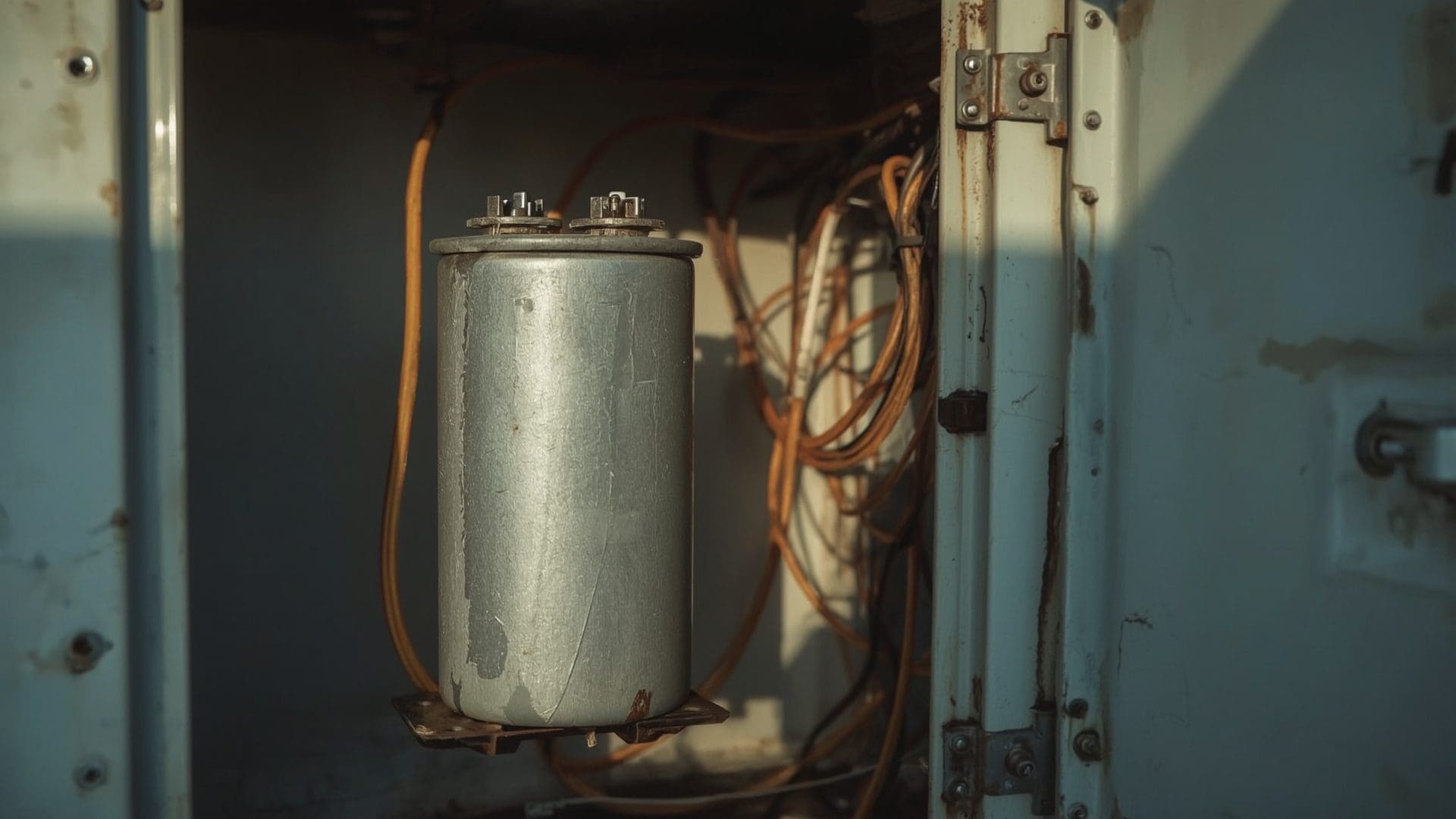
Quick Answer: An AC capacitor stores and releases electrical energy to start and run your system’s motors. Without it, the compressor, condenser fan, and air handler fan cannot start or operate correctly. Most AC systems have two: a start capacitor and a run capacitor.
Think of a capacitor like a battery that charges and discharges very quickly. Your AC’s motors need a surge of power to get moving. That’s where the start capacitor comes in. Once the motor is running, the run capacitor keeps feeding it a steady electrical signal to maintain consistent speed.
Most residential AC systems use a dual-run capacitor. This is a single unit that handles both the compressor motor and the condenser fan motor at the same time. If that one component fails, two critical parts of your system go down together.
Start Capacitor vs. Run Capacitor: What’s the Difference?
Start capacitors provide a high-voltage burst of energy for a fraction of a second to get the motor spinning. Run capacitors stay active the entire time the system runs. They operate at lower voltage but need to hold up for hours at a time, especially during summer heat.
| Capacitor Type | Function | Voltage Rating | Operating Duration | Failure Symptom |
|---|---|---|---|---|
| Start Capacitor | Motor startup boost | 125V to 330V | Seconds per cycle | AC won’t start or starts slowly |
| Run Capacitor | Motor sustained operation | 370V to 440V | Continuous while running | Humming, overheating, shutoff |
| Dual-Run Capacitor | Compressor + condenser fan | 370V or 440V | Continuous while running | Fan not spinning, compressor off |
What Are the Most Common AC Capacitor Failure Symptoms?
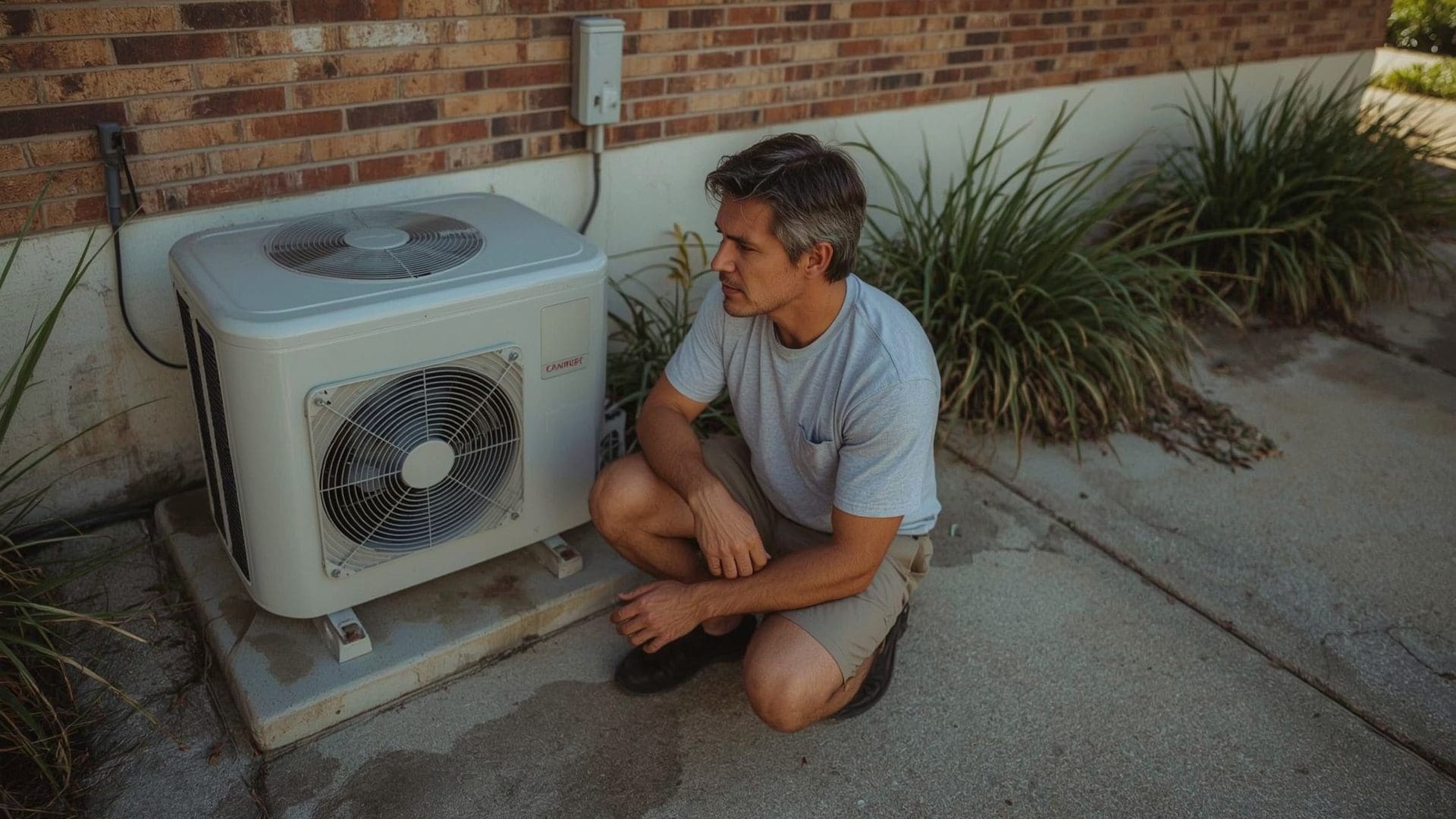
Quick Answer: The most common symptoms are humming from the outdoor unit, slow or hard startup, the AC shutting off early, warm air from vents, and a visibly swollen or leaking capacitor. Most symptoms appear suddenly during high-demand periods like heat waves.
Humming Sound from the Outdoor Unit
If you hear a low, steady hum from your outdoor unit but the fan blade isn’t spinning, that’s a strong sign of run capacitor failure. The motor is receiving power and trying to start, but without the capacitor’s boost, it can’t overcome the inertia. The motor just hums and strains.
Left alone, this can burn out the motor entirely. A failed capacitor turns a $200 repair into a $600 to $900 motor replacement. Don’t ignore the hum.
Slow Startup or Hard Starting
A healthy AC system kicks on within one to two seconds of the thermostat calling for cooling. If you notice the system taking four to six seconds to start, stuttering, or making a struggling sound before the fan catches speed, the start capacitor is likely weakening.
This symptom often shows up before a complete failure. It’s your system’s early warning signal that the capacitor’s capacitance (its ability to store charge) has dropped below the rated value.
AC Turns On Then Shuts Off Quickly
This is called short cycling. The system starts, runs for two to five minutes, then shuts off before the home reaches the set temperature. It then restarts a few minutes later and repeats the cycle.
A failing run capacitor causes the motor to run inefficiently and overheat. The system’s thermal protection kicks in and shuts things down to prevent damage. Short cycling driven by a bad capacitor puts extra wear on the compressor with every restart.
Warm Air Coming from Vents
If your AC is running but blowing warm or room-temperature air, a capacitor problem may be preventing the compressor from starting properly. The air handler fan might be running while the compressor sits idle. Air moves through the system, but no cooling happens because the refrigerant compression cycle never starts.
AC Won’t Turn On At All
A fully dead capacitor means the motors have no power boost to start. You might hear a click from the contactor (the relay switch in your outdoor unit) when the thermostat calls for cooling, but the fan and compressor stay silent. No movement, no airflow, no cooling.
Visibly Damaged or Swollen Capacitor
Capacitors that have failed completely often show physical signs. A technician looking inside the electrical compartment of your outdoor unit may find a capacitor with a bulging or domed top instead of a flat one. Oil leaks or brown residue around the capacitor are also signs of internal breakdown.
| Symptom | Likely Cause | Component Affected | Urgency Level |
|---|---|---|---|
| Humming, fan not spinning | Run capacitor failure | Condenser fan motor | High — turn off system |
| Slow or hard startup | Start capacitor weakening | Compressor or fan motor | Medium — schedule service soon |
| Shutting off after 2-5 minutes | Motor overheating from bad capacitor | Compressor | High — avoid further cycling |
| Warm air, system running | Compressor not starting | Compressor + run capacitor | High — no cooling occurring |
| System won’t start at all | Complete capacitor failure | All motors | Critical — system is down |
| Swollen or leaking component | Internal capacitor breakdown | Capacitor itself | Critical — replace immediately |
Why Do AC Capacitors Fail?
Quick Answer: AC capacitors fail from heat exposure, age, power surges, and running outside their rated voltage. Most capacitors last 10 to 20 years under normal conditions, but high summer temperatures accelerate degradation significantly, especially in southern climates.
Heat Is the Primary Enemy of Capacitors
Capacitors are rated for a maximum operating temperature, typically 70°C to 85°C (158°F to 185°F). Inside a metal outdoor unit sitting in direct summer sun, temperatures can climb well beyond that range. Every degree over the rated limit accelerates the chemical breakdown of the capacitor’s internal dielectric material.
This is why capacitor failures spike during heat waves. The hottest day of the year is often the day the capacitor gives out.
Power Surges and Electrical Stress
Lightning strikes, utility grid fluctuations, and sudden power restoration after an outage can all push voltage spikes through your AC system. Capacitors absorb some of this energy, but a strong enough surge can damage or destroy them instantly.
Installing a whole-home surge protector or an AC-specific surge arrestor adds a layer of defense against this type of failure.
Age and Normal Wear
Even under ideal conditions, capacitors degrade over time. The electrolytic fluid inside slowly evaporates, reducing the component’s ability to store charge. Most capacitors show measurable degradation after 8 to 12 years and reach end-of-life between 10 and 20 years depending on usage and climate.
Voltage Mismatch
A capacitor installed with a voltage or capacitance rating that doesn’t match the motor’s specifications will fail faster. This is a common result of incorrect DIY replacement or a technician using an off-spec part. Always verify the microfarad (µF) rating and voltage rating before installing a replacement capacitor.
How Is an AC Capacitor Tested and Diagnosed?
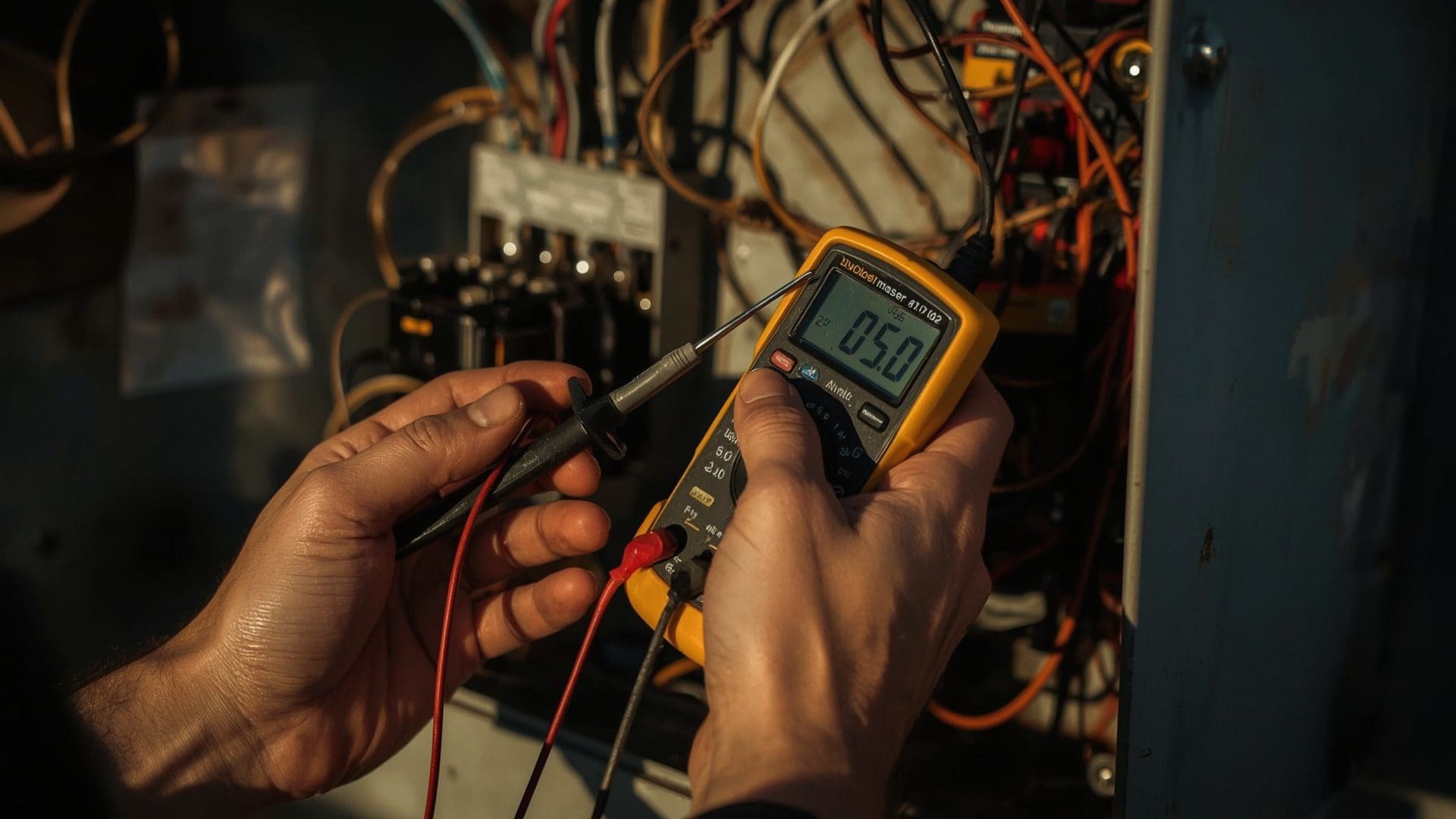
Quick Answer: Technicians use a multimeter set to capacitance mode to test a capacitor’s microfarad reading. A healthy capacitor reads within 6% of its rated value. Readings below that threshold confirm the capacitor has degraded and needs replacement.
The Multimeter Test
A multimeter with a capacitance setting (labeled µF or CAP) can measure how much charge the capacitor can hold. The rated capacitance is printed on the capacitor’s label. If the measured reading falls more than 6% below the rated value, the part has failed its tolerance and should be replaced.
For example, a capacitor rated at 45 µF should read between 42.3 µF and 47.7 µF. A reading of 38 µF or lower means the capacitor is out of spec.
Visual Inspection Signs
A swollen top, brownish residue or oil around the base, burn marks, or cracked casing are all visual confirmation of failure. These signs mean the capacitor has already broken down internally and must be replaced before the system runs again.
| Test Method | Tool Required | Acceptable Range | Failure Indicator | Who Should Perform |
|---|---|---|---|---|
| Capacitance measurement | Digital multimeter | Within 6% of rated µF | Reading below 6% tolerance | HVAC technician |
| Visual inspection | None required | Flat top, no residue | Swollen top, oil, burn marks | Technician or careful homeowner |
| Voltage check | Multimeter (AC volts) | Matches nameplate rating | Significant voltage drop | HVAC technician only |
How Much Does AC Capacitor Replacement Cost?
Quick Answer: AC capacitor replacement typically costs $150 to $400 with professional labor included. The part itself ranges from $10 to $60. Labor makes up most of the cost. Dual-run capacitors and emergency service calls push prices toward the higher end of that range.
Cost Breakdown by Capacitor Type
| Capacitor Type | Part Cost | Labor Cost | Total Estimate | Notes |
|---|---|---|---|---|
| Single run capacitor | $10 to $30 | $75 to $150 | $150 to $250 | Most common replacement |
| Dual-run capacitor | $20 to $60 | $75 to $150 | $175 to $300 | Handles compressor + fan |
| Start capacitor | $10 to $40 | $75 to $150 | $150 to $275 | Often paired with hard start kit |
| Emergency/after-hours call | Same part cost | $150 to $250 | $250 to $400 | Weekend or holiday premium |
Is a Hard Start Kit Worth Adding?
A hard start kit is a supplemental capacitor that helps aging compressors start more easily. It reduces startup electrical draw by 30% to 50%, which is especially useful for older systems or homes with lower voltage at the outdoor unit. Technicians often recommend adding one when replacing a capacitor in a system that’s more than eight years old.
A hard start kit typically costs an additional $75 to $150 installed and can extend compressor life by reducing startup stress over thousands of cycles.
Is Replacing an AC Capacitor a Safe DIY Repair?
Quick Answer: Capacitor replacement is not safe for most homeowners. A charged capacitor holds 370V to 440V of electricity and can deliver a lethal shock even with the power off. Unless you have electrical experience and proper discharge tools, always hire a licensed HVAC technician.
Why Capacitors Are Dangerous to Handle
Unlike most household electrical components that are safe when the power is disconnected, capacitors store charge independently. They can hold a full charge for hours or even days after the system is powered off. Touching the terminals of a charged capacitor without discharging it first can cause a severe electric shock or cardiac arrest.
What Proper Discharge Requires
Technicians use an insulated discharge tool or a resistor rated for the voltage to safely bleed the stored charge before handling the capacitor. This is not something you can safely improvise with a screwdriver. If you’re a homeowner curious about the visual inspection steps, you can safely look at the capacitor after cutting power, but don’t touch the terminals or connected wires.
When to Call a Licensed HVAC Technician
Call a professional any time you suspect a capacitor problem. The service visit also gives a technician the chance to check capacitor readings on all components, inspect wiring, and catch any related problems before they cause secondary damage. A capacitor call is often how larger issues get caught early.
What Happens If You Keep Running an AC with a Bad Capacitor?
Quick Answer: Continuing to run an AC with a failing capacitor risks burning out the motor or compressor. Compressor replacement costs $1,200 to $2,500 or more. Catching a bad capacitor early is one of the most cost-effective repairs in HVAC maintenance.
When a motor operates without proper capacitor support, it draws higher-than-normal amperage to compensate. This excess current generates heat. Over time, the motor windings (the internal copper wire coils) can burn out. A burned motor is not repairable. It needs full replacement.
The compressor is the most expensive component in your AC system. Protecting it with a timely $200 capacitor replacement instead of waiting until it fails is one of the clearest examples of preventive maintenance paying off directly.
How Can You Prevent AC Capacitor Failure?
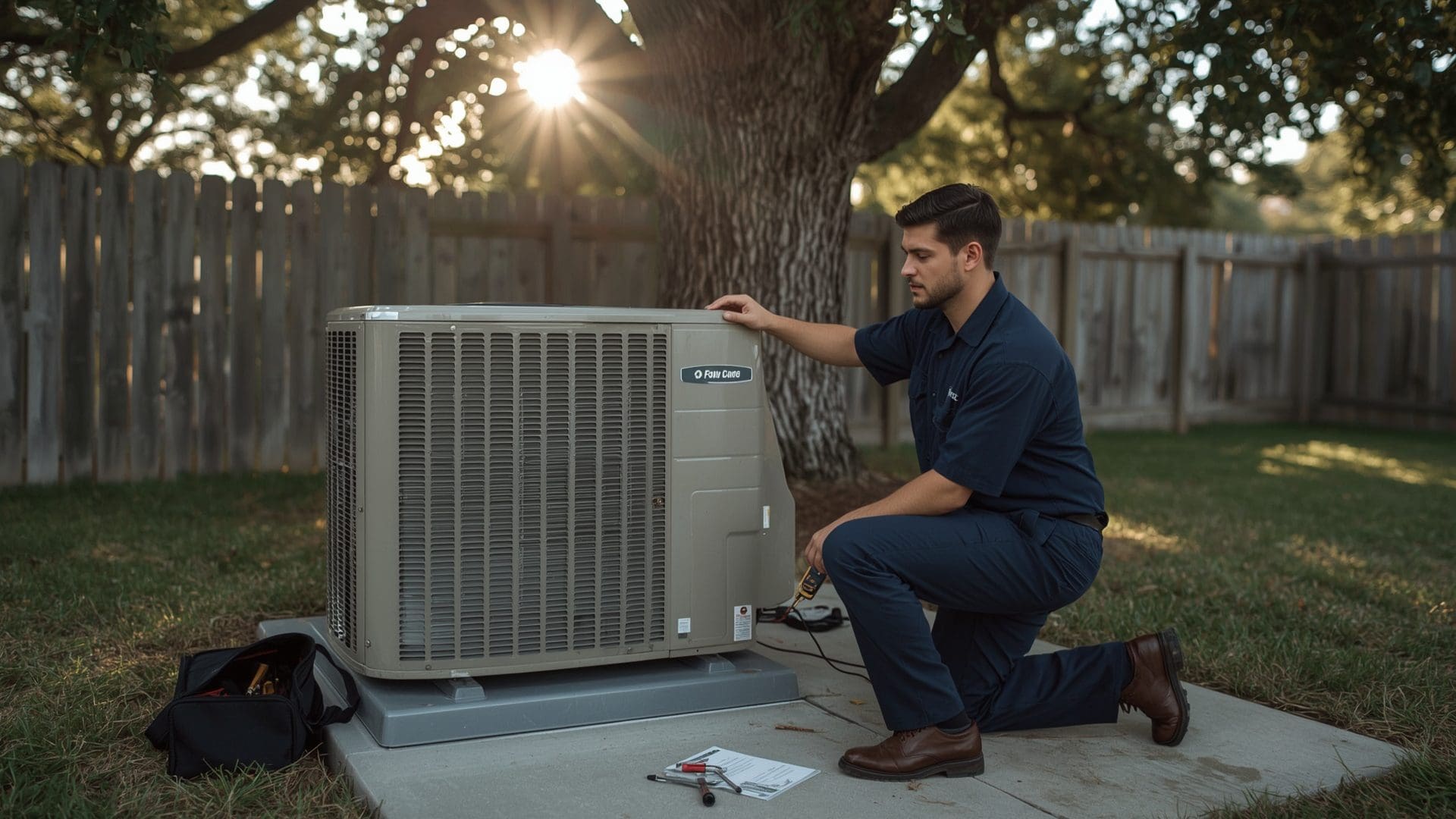
Quick Answer: Annual AC tune-ups include capacitor testing as a standard step. Keeping the outdoor unit shaded, installing surge protection, and replacing capacitors proactively when readings drop below 10% of rated value are the most effective prevention strategies.
Schedule Annual Preventive Maintenance
A technician performing a seasonal tune-up will measure the capacitance of your run and start capacitors using a multimeter. If readings are trending low but still within tolerance, they can flag it for proactive replacement before a hot-weather failure occurs. This is the most reliable way to stay ahead of capacitor problems.
Protect Against Power Surges
Install a surge protector rated for HVAC equipment at the outdoor disconnect box. These devices absorb voltage spikes before they reach sensitive components like capacitors and control boards. They cost $50 to $150 installed and can protect thousands of dollars in equipment.
Reduce Heat Stress on the Outdoor Unit
Shading the outdoor condenser unit can reduce ambient temperatures around the unit by 10°F to 15°F. This directly reduces the thermal stress on capacitors and other components inside the electrical compartment. Don’t block airflow — use shade from trees or a properly positioned fence or awning that still allows full air circulation around the unit.
Frequently Asked Questions About AC Capacitor Failure
How long do AC capacitors typically last?
Most AC capacitors last 10 to 20 years under normal operating conditions. Heat, power surges, and voltage mismatches can shorten that lifespan significantly. Systems in hot climates like the Southwest or Southeast U.S. may see capacitor failures after just 8 to 12 years.
Can a bad capacitor damage the compressor?
Yes. A failing capacitor forces the compressor to draw excess current on every startup. Over time, this overheats and burns out the motor windings inside the compressor. Compressor replacement runs $1,200 to $2,500, making early capacitor replacement one of the most cost-effective repairs available.
What does a failing capacitor sound like?
The most common sound is a steady low-pitched hum coming from the outdoor unit while the fan isn’t moving. Some homeowners also describe a clicking or stuttering sound during startup attempts. If you hear these sounds with no normal AC operation, shut the system off and call a technician.
Can I test my AC capacitor myself?
You can visually inspect a capacitor for a swollen top or oily residue by carefully looking inside the outdoor unit’s electrical panel — without touching anything. Electrical testing requires a multimeter with a capacitance setting and, critically, the ability to safely discharge the capacitor first. Most homeowners should leave electrical testing to a licensed HVAC technician.
How do I know if it’s the capacitor or the compressor that’s failed?
A technician can isolate the problem using a multimeter. If the capacitor tests within spec but the compressor still won’t start, the compressor itself may have failed. Capacitor failure is far more common and far cheaper to fix, so technicians typically test the capacitor first before diagnosing the compressor.
Does homeowners insurance cover a failed AC capacitor?
Standard homeowners insurance policies do not cover AC capacitor replacement. It’s considered a maintenance-related repair. A home warranty plan may cover it, depending on your contract terms. Check your policy’s language around HVAC components and wear-and-tear exclusions before filing a claim.