
Your AC filter is the first line of defense against dust, allergens, and airborne particles in your home. Change it too rarely and your system works harder, your air quality drops, and your energy bill climbs. Change it too often and you waste money on filters you didn’t need yet.
The right schedule depends on your filter type, your home, and who lives in it. This guide covers all three so you never have to guess again.
Key Takeaways
- Filter type sets the baseline — fiberglass filters need monthly changes, pleated filters every 60 to 90 days, and HEPA filters every 12 months.
- Pets and allergies shorten the schedule — one dog or cat can cut your replacement interval in half.
- A clogged filter costs you money — a dirty filter can increase energy consumption by 5 to 15 percent.
- Visual inspection is your best tool — if you hold the filter up to light and can’t see through it, replace it now.
- MERV rating affects airflow — higher MERV ratings catch more particles but restrict more airflow; match the rating to your system’s specs.
- Seasonal changes trigger extra checks — replace your filter at the start of peak cooling and heating seasons regardless of your regular schedule.
How Often Should You Change Your AC Filter?
Quick Answer: Most AC filters should be replaced every 30 to 90 days. Fiberglass filters need monthly changes. Pleated filters last 60 to 90 days. HEPA filters can go up to 12 months. Pets, allergies, and high usage shorten every timeline.
There is no single answer that fits every home. The baseline comes from your filter type, but your household adjusts that baseline up or down.
A single adult living alone in a small apartment with no pets can stretch a pleated filter to 90 days without issue. A family of five with two dogs and a child who has asthma may need to swap that same filter every 30 days.
The sections below break down both variables so you can set a schedule that actually fits your home.
What Are the Different Types of AC Filters?
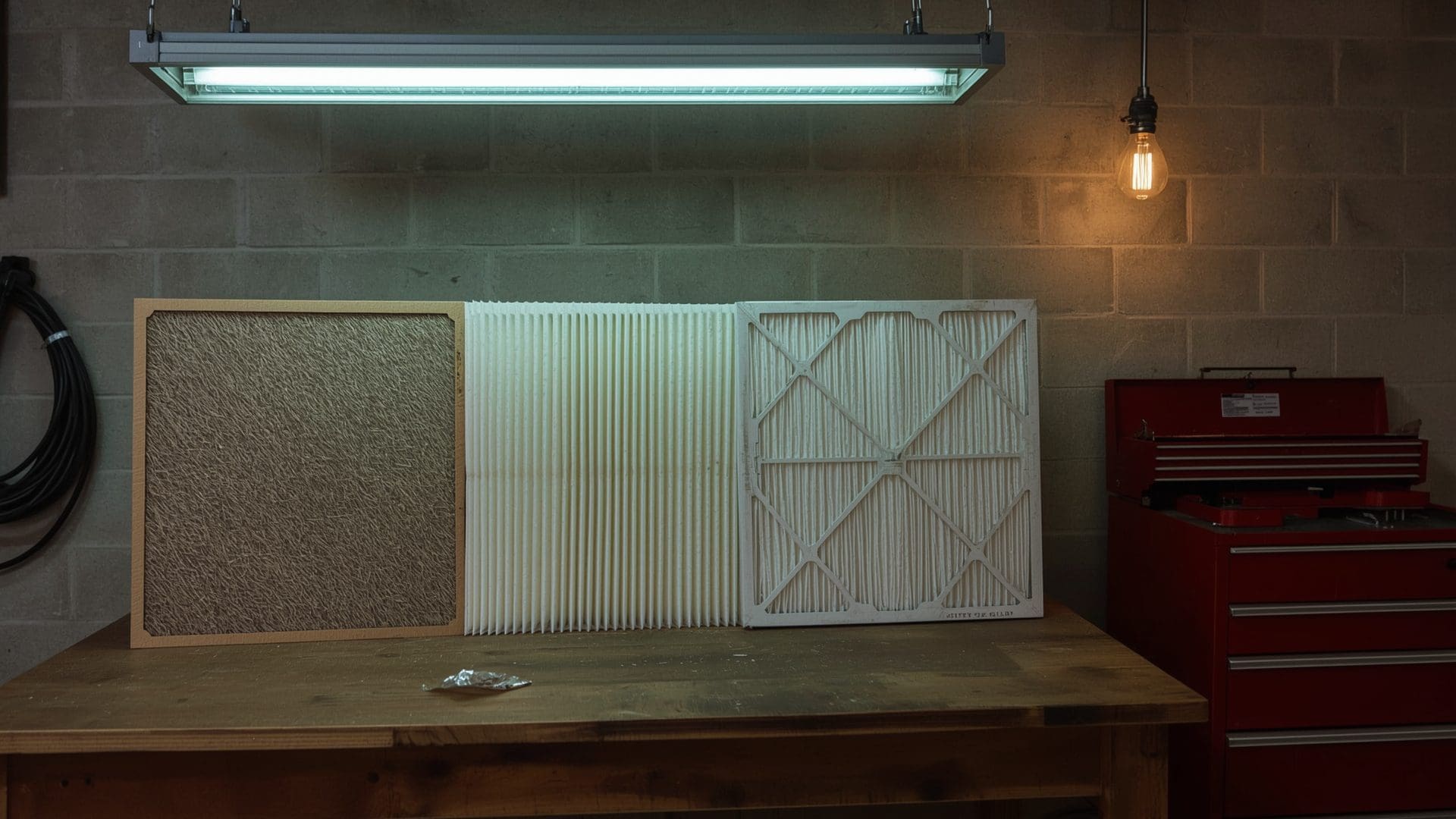
Quick Answer: The three main AC filter types are fiberglass, pleated, and HEPA. They differ in material, MERV rating (a measure of filtration efficiency), cost, and how long they last before needing replacement.
Fiberglass Filters
Fiberglass filters are the cheapest option, usually $1 to $5 each. They are made from layered glass fibers and catch large particles like dust and lint. Their MERV rating typically falls between 1 and 4, which means they do not filter fine particles like pollen or pet dander effectively.
Because they clog quickly and have low capacity, they need to be replaced every 30 days. They are best suited for systems where airflow is the priority over air quality.
Pleated Filters
Pleated filters are made from polyester or cotton paper folded into accordion-style pleats. The pleating increases surface area, which means they trap more particles before getting clogged. Their MERV rating typically falls between 8 and 13.
They cost $10 to $30 each and last 60 to 90 days under normal household conditions. This is the most common filter type for residential HVAC systems.
HEPA Filters
HEPA stands for High-Efficiency Particulate Air. These filters capture 99.97% of particles as small as 0.3 microns, including mold spores, bacteria, and fine dust. They carry a MERV rating equivalent of 17 or higher.
HEPA filters cost $20 to $100 each and typically last 12 months. Not all residential HVAC systems are designed to handle HEPA filters. The dense filtration material restricts airflow significantly, so check your system’s manual before switching.
AC Filter Comparison by Type
| Filter Type | MERV Rating | Average Cost | Replacement Interval | Best For |
|---|---|---|---|---|
| Fiberglass | 1 to 4 | $1 to $5 | Every 30 days | Budget use, basic dust capture |
| Pleated (standard) | 8 to 11 | $10 to $20 | Every 60 to 90 days | Most homes, allergen reduction |
| Pleated (high-efficiency) | 11 to 13 | $20 to $30 | Every 60 days | Homes with mild allergy sufferers |
| HEPA | 17+ | $20 to $100 | Every 12 months | Severe allergies, asthma, medical needs |
| Washable/Reusable | 1 to 4 | $20 to $40 (one-time) | Clean every 30 days | Low-maintenance preference, mild climates |
What Is a MERV Rating and Why Does It Matter?
Quick Answer: MERV stands for Minimum Efficiency Reporting Value. It measures how effectively a filter captures particles. Ratings run from 1 to 20. Higher numbers mean finer filtration but also more airflow restriction. Residential systems typically use MERV 8 to 13.
Choosing a filter with the right MERV rating matters for two reasons: air quality and system health. A filter rated too low lets fine particles pass through. A filter rated too high can restrict airflow enough to strain your blower motor.
Most residential AC systems are designed for MERV 8 to 13. Check your system’s manufacturer guide or the filter slot label before going higher. Some high-efficiency systems can handle MERV 13 without issue, while older systems may struggle above MERV 10.
MERV Rating Reference Table
| MERV Rating | Particle Size Captured | What It Filters | Typical Use |
|---|---|---|---|
| 1 to 4 | 10+ microns | Pollen, dust mites, carpet fibers | Window AC units, basic residential |
| 5 to 8 | 3 to 10 microns | Mold spores, pet dander, hairspray | Better residential, light commercial |
| 9 to 12 | 1 to 3 microns | Auto emissions, lead dust, humidifier dust | Superior residential, general commercial |
| 13 to 16 | 0.3 to 1 micron | Bacteria, tobacco smoke, fine particles | High-end residential, hospital labs |
| 17 to 20 | Less than 0.3 microns | Viruses, carbon dust, combustion smoke | Cleanrooms, pharmaceutical, HEPA standard |
How Do Pets Affect How Often You Should Change Your Filter?
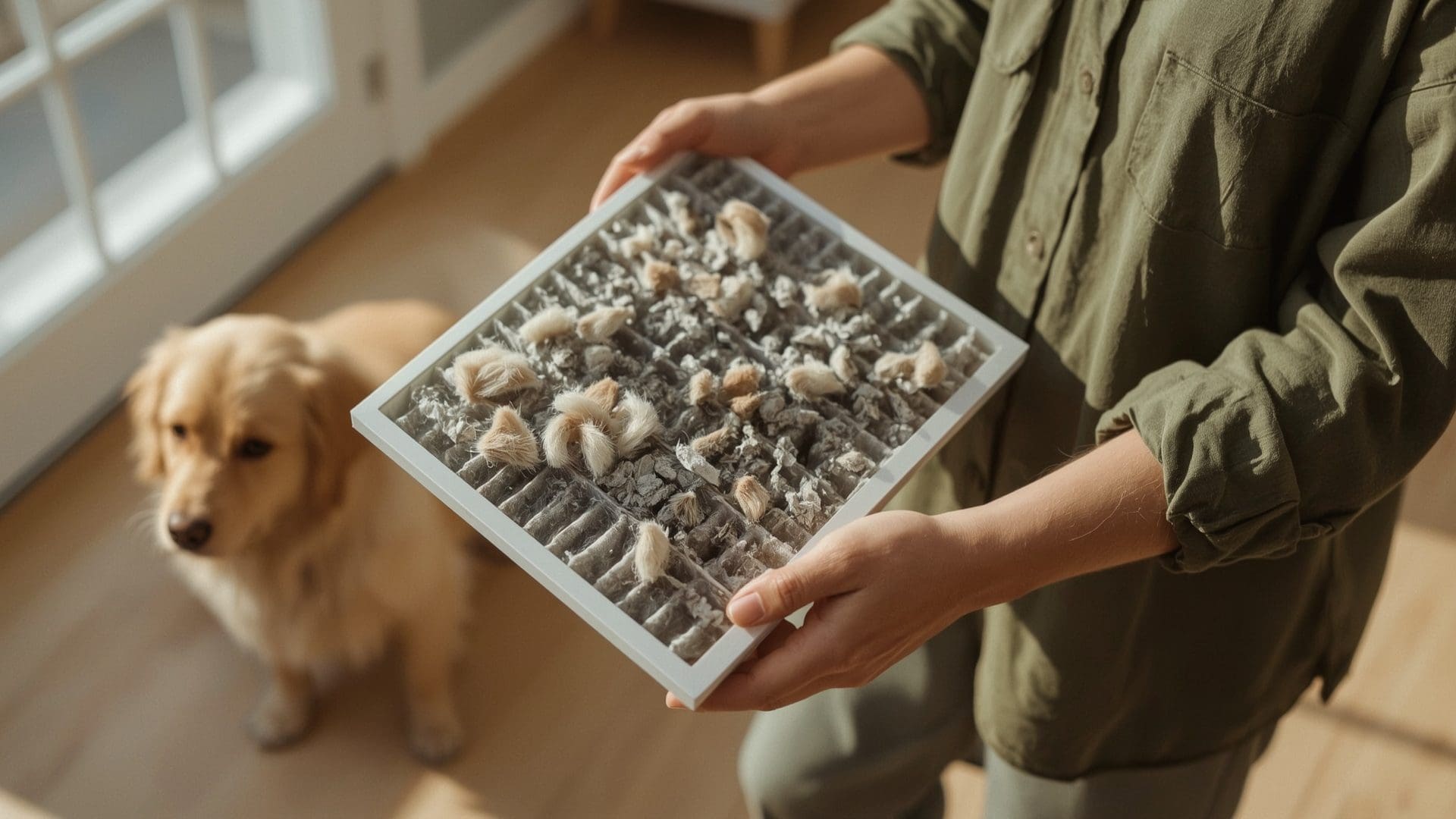
Quick Answer: One pet roughly halves your filter’s lifespan. A pleated filter that normally lasts 90 days should be replaced every 45 to 60 days with one dog or cat. Two or more pets push that to every 20 to 45 days.
Pet dander is one of the most significant contributors to filter loading. Dander consists of microscopic flakes of skin, and it becomes airborne every time your pet moves, shakes, or grooms itself. Pet hair adds to the problem by physically clogging the filter’s surface faster than dust alone.
Cats tend to shed fine dander more consistently than dogs, while dogs with double coats like German Shepherds or Huskies produce heavier hair loads. Either way, the impact on your filter is real and measurable.
Filter Replacement Schedule With Pets
| Household Type | Fiberglass Filter | Pleated Filter (MERV 8-11) | HEPA Filter |
|---|---|---|---|
| No pets, 1 to 2 adults | 30 days | 90 days | 12 months |
| No pets, family of 4+ | 30 days | 60 days | 9 to 12 months |
| 1 dog or cat | 20 to 30 days | 45 to 60 days | 6 to 9 months |
| 2+ pets | 15 to 20 days | 20 to 45 days | 4 to 6 months |
| Long-haired or heavy-shedding breed | 15 to 20 days | 30 days | 4 to 6 months |
How Do Allergies and Asthma Change Your Filter Schedule?
Quick Answer: Households with allergy or asthma sufferers should replace filters more frequently and use a higher MERV rating. A MERV 11 to 13 pleated filter changed every 30 to 45 days provides meaningful protection against pollen, mold spores, and pet dander.
When someone in your home has allergies or asthma, a clogged filter does not just hurt your HVAC system. It directly affects their health. A dirty filter stops capturing new particles and can even release previously trapped ones back into the air as pressure builds across the filter face.
For households with sensitive occupants, the goal is not just frequency but also filter quality. Upgrading from MERV 8 to MERV 11 or 13 reduces airborne allergens significantly. Pair that with a 30 to 45-day replacement cycle for the best results.
Keep in mind that air purifiers in individual rooms can complement your central system filter but do not replace it. The central filter still needs regular changes.
What Are the Signs Your AC Filter Needs to Be Changed?
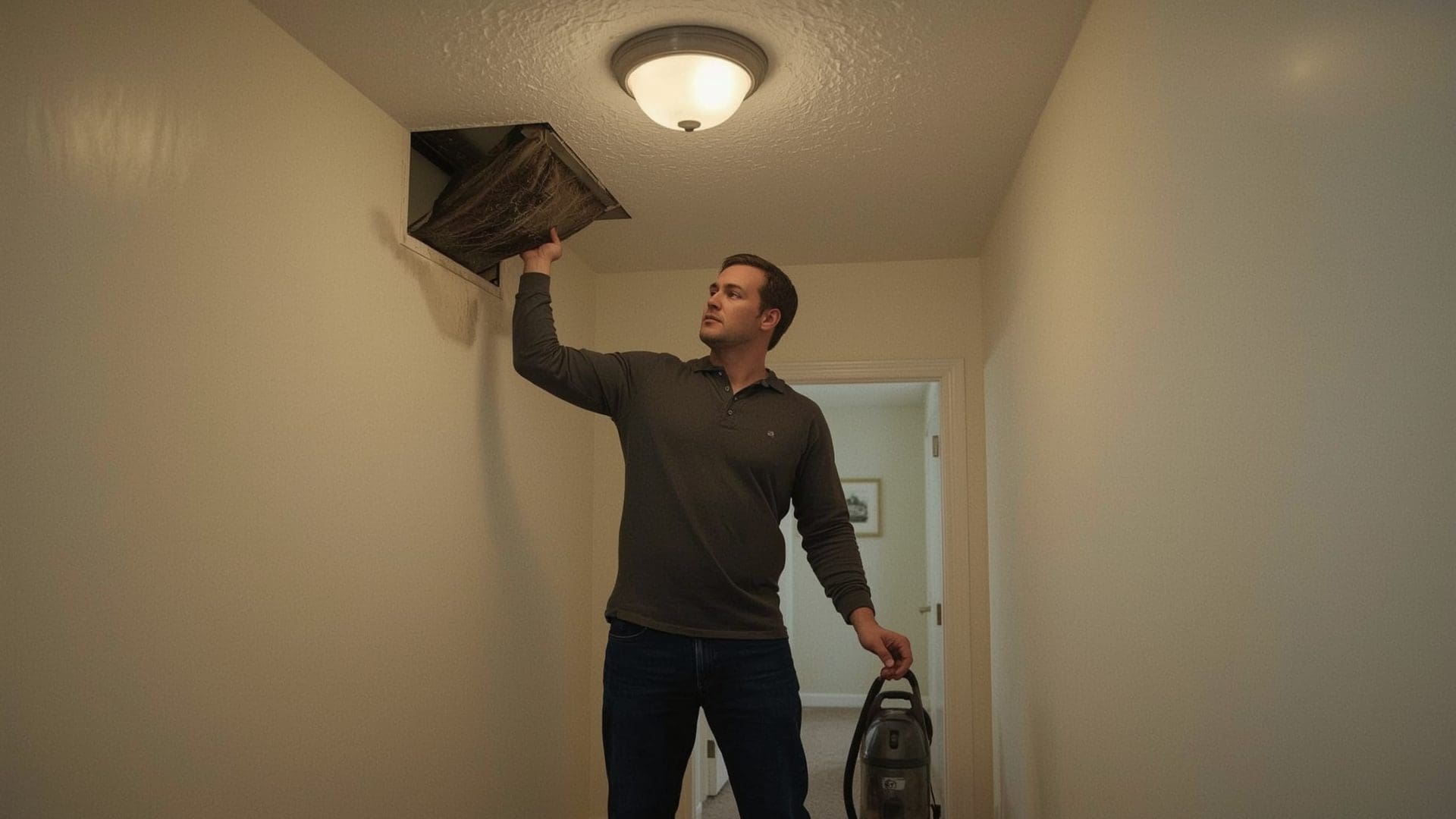
Quick Answer: Six clear signs your filter is due for replacement: visible gray or brown discoloration, reduced airflow from vents, increased dust on surfaces, musty or stale odors from vents, rising energy bills without a usage change, and your AC running longer cycles than usual.
Visual Signs
The simplest check is to pull the filter out and hold it up to a light source. A new filter lets light pass through clearly. A dirty filter blocks light completely or shows a thick gray or brown layer of debris on the intake side.
If the filter surface looks like a felt blanket of dust, it is overdue. Replace it immediately.
Airflow and Comfort Signs
A clogged filter restricts airflow through your system. You may notice weaker airflow from your vents, rooms that take longer to cool down, or uneven temperatures across your home. These symptoms often appear before visual signs do.
Your thermostat may show the AC running but the air feels less cool. That is often a filter problem, not a refrigerant problem.
Indoor Air Quality Signs
If you notice more dust settling on furniture, countertops, or electronics than usual, your filter may no longer be capturing particles effectively. Musty or dusty odors from your vents are another signal. Those smells often indicate that debris has bypassed the filter and settled inside the ductwork or on the evaporator coil.
Energy Bill Signs
A dirty filter forces your blower motor to work harder to pull air through the restriction. This increases electricity consumption. If your energy bill rises without a change in usage habits or outdoor temperature patterns, check your filter first before calling a technician.
Studies on residential HVAC systems consistently show that a clogged filter increases energy use by 5 to 15 percent.
How Does Where You Live Affect Filter Change Frequency?
Quick Answer: Climate, local air quality, and geographic location all influence how fast your filter loads. Homes in dry, dusty, or high-pollen regions need more frequent changes. Vacation homes used part-time may need less frequent changes but still require regular inspection.
Dusty or Dry Climates
Homes in arid regions like the American Southwest see significantly more airborne dust. Desert areas carry fine particulate matter year-round, which loads filters much faster than in humid coastal regions. In these climates, check your filter every two to three weeks regardless of your filter type.
High-Pollen Regions
Pollen season in the southeastern and midwestern United States peaks in spring and fall. During peak pollen periods, even a MERV 10 pleated filter can load within 30 to 45 days instead of the standard 90. Mark your calendar for extra filter checks during April through June and September through November.
Urban Areas and Air Pollution
Homes near major roads, industrial zones, or construction sites face higher concentrations of particulate matter (PM2.5), which refers to fine particles 2.5 microns or smaller that penetrate deep into the lungs. These particles load filters faster and require MERV 11 or higher to capture effectively.
Vacation and Seasonal Homes
If a home sits vacant for months at a time, filters do not load as quickly. However, moisture and mold can still develop inside an idle HVAC system. Inspect the filter before restarting the system after any period of non-use longer than two months.
How Often Should You Change a Filter in a New Construction Home?
Quick Answer: New construction homes generate significant construction dust for up to six months after completion. Check and replace filters every 2 to 4 weeks during this period. Drywall dust, sawdust, and insulation fibers can clog filters in days during active construction phases.
Construction dust is unusually fine and dense. It passes through low-MERV filters quickly and overloads mid-range filters faster than normal household dust. Use a MERV 8 to 10 pleated filter during this phase and check it weekly for the first month.
Once construction dust settles, typically after three to six months, you can return to a standard replacement schedule based on your household factors.
What Happens If You Don’t Change Your AC Filter?
Quick Answer: A neglected filter restricts airflow, overworks your blower motor, raises energy bills, and can cause your evaporator coil to freeze. Long-term neglect leads to compressor damage, which is the most expensive AC repair, often costing $1,200 to $2,800 to replace.
Short-Term Effects
Within one to two months of neglect, you will notice weaker airflow, higher energy bills, and reduced cooling performance. Your AC runs longer cycles trying to reach the set temperature. This is called short cycling when the system repeatedly starts and stops without completing a full cycle, and it puts strain on your compressor.
Long-Term Effects
When airflow is consistently restricted, your evaporator coil gets too cold and ice forms on its surface. A frozen evaporator coil blocks airflow entirely and can cause your system to shut down completely. Once the ice melts, water can overflow the drain pan and cause water damage.
Beyond the coil, the blower motor works against increased resistance every minute a clogged filter stays in place. Over months, this shortens motor lifespan from the typical 10 to 15 years down to as few as 5 to 7 years in severe cases.
Cost of Neglect
| Damage Type | Cause | Repair Cost Range | Prevention |
|---|---|---|---|
| Frozen evaporator coil | Restricted airflow from clogged filter | $200 to $1,500 | Replace filter on schedule |
| Blower motor failure | Overwork from restricted airflow | $450 to $2,000 | Regular filter changes |
| Compressor failure | Heat buildup from poor airflow | $1,200 to $2,800 | Consistent maintenance |
| Water damage from overflow | Frozen coil melt runoff | $500 to $5,000+ | Timely filter replacement |
| Higher energy bills (ongoing) | System working harder | $10 to $50/month extra | Fresh filter monthly or quarterly |
How Do You Actually Change an AC Filter?
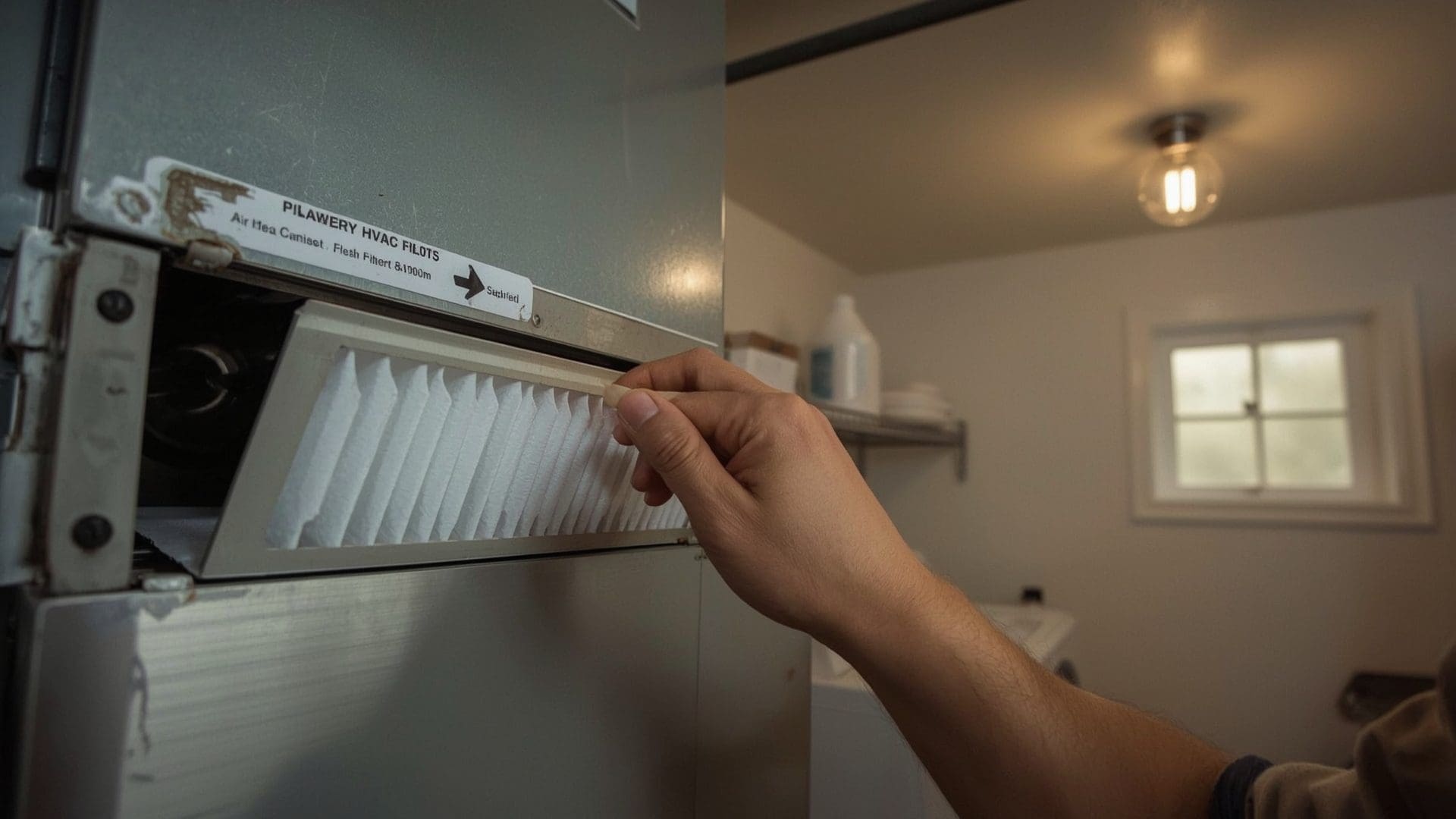
Quick Answer: Turn off your HVAC system, locate the filter slot near the air handler or return air vent, slide out the old filter, note the airflow direction arrow on the frame, insert the new filter with the arrow pointing toward the system, and turn the system back on. The process takes under five minutes.
Step-by-Step Filter Replacement
- Turn off the system. Shut the thermostat to “off” before opening the filter slot. This prevents unfiltered air from pulling through the system while the filter is out.
- Find the filter location. Most residential systems have the filter inside the air handler unit or at the return air vent, which is the large vent that pulls air in rather than blowing it out.
- Remove the old filter. Slide it out carefully to avoid shaking loose debris. Place it directly into a garbage bag.
- Check the size. The filter size is printed on the frame of the old filter. Common sizes include 16x20x1, 20x25x1, and 16x25x1 inches. Match this exactly when buying a replacement.
- Check the airflow arrow. The new filter will have an arrow on the frame showing airflow direction. The arrow must point toward the blower, meaning away from the return duct and toward the system.
- Insert the new filter. Slide it into the slot with the arrow pointing the correct direction. It should sit flush with no gaps around the edges.
- Turn the system back on. Restore the thermostat setting. Write the replacement date on the filter frame with a marker.
Should You Set a Reminder to Change Your AC Filter?
Quick Answer: Yes. A calendar reminder is the most reliable way to stay on schedule. Set a recurring reminder on your phone, use a smart thermostat app with filter alerts, or write the next change date directly on the filter frame in permanent marker when you install it.
Most people miss filter changes not because they forget the concept but because they lose track of time. A recurring monthly reminder costs nothing and prevents hundreds of dollars in repairs.
Smart thermostats like Ecobee and Honeywell Home models include filter reminder features that track run hours rather than calendar days. Run-hour tracking is more accurate than calendar-based reminders because it accounts for how hard your system actually worked, not just how many days passed.
If you buy filters in bulk, the cost per filter drops significantly. A pack of six pleated MERV 10 filters costs roughly $30 to $50 total, which is about $5 to $8 per filter. Having replacements on hand also removes the friction of having to go buy one before you can complete the task.
Frequently Asked Questions
Can you clean and reuse an AC filter instead of replacing it?
Washable filters are designed to be rinsed and reused. Standard fiberglass and pleated filters are not. Washing a disposable filter damages the filter media and leaves gaps that allow unfiltered air to pass through. If you want a reusable option, buy a filter specifically labeled as washable.
Does a thicker filter last longer than a thin one?
Yes, generally. A 4-inch deep pleated filter holds more debris than a 1-inch filter of the same MERV rating. A 4-inch MERV 11 filter can last 6 to 12 months under normal conditions, while a 1-inch MERV 11 filter lasts 60 to 90 days. However, your system’s filter slot must physically accommodate the thicker size.
What size AC filter do I need?
The size is printed on the frame of your current filter. If you don’t have the old filter, check the owner’s manual for your air handler. Common residential sizes are 16x20x1, 20x25x1, and 16x25x1 inches. Using the wrong size leaves gaps that bypass filtration entirely.
Is a higher MERV rating always better?
Not for every system. Higher MERV filters capture more particles but restrict airflow more. Using a MERV 16 filter in a system designed for MERV 8 can strain your blower motor and reduce airflow to the point where your system loses efficiency. Match the MERV rating to your system’s design specifications.
How does a dirty filter affect indoor air quality?
A saturated filter stops capturing new particles. It can also release trapped particles back into the airstream as pressure builds. This means a severely clogged filter can actually make indoor air quality worse than a system with no filter at all. Regular replacement keeps indoor air quality consistently high.
Do mini-split AC systems need filter changes too?
Mini-split systems, also called ductless AC units, use washable mesh filters inside the wall-mounted air handler. These filters should be cleaned every two weeks in areas with heavy use or high dust levels and every four weeks under normal conditions. They do not use replaceable filter cartridges like central HVAC systems.